It’s one of the most common questions we hear from San Diego homeowners: “Can I save some money by switching to biweekly lawn service?” On the surface, it seems like a simple way to trim the budget. But the health, appearance, and long-term viability of your lawn hang on getting this decision right.
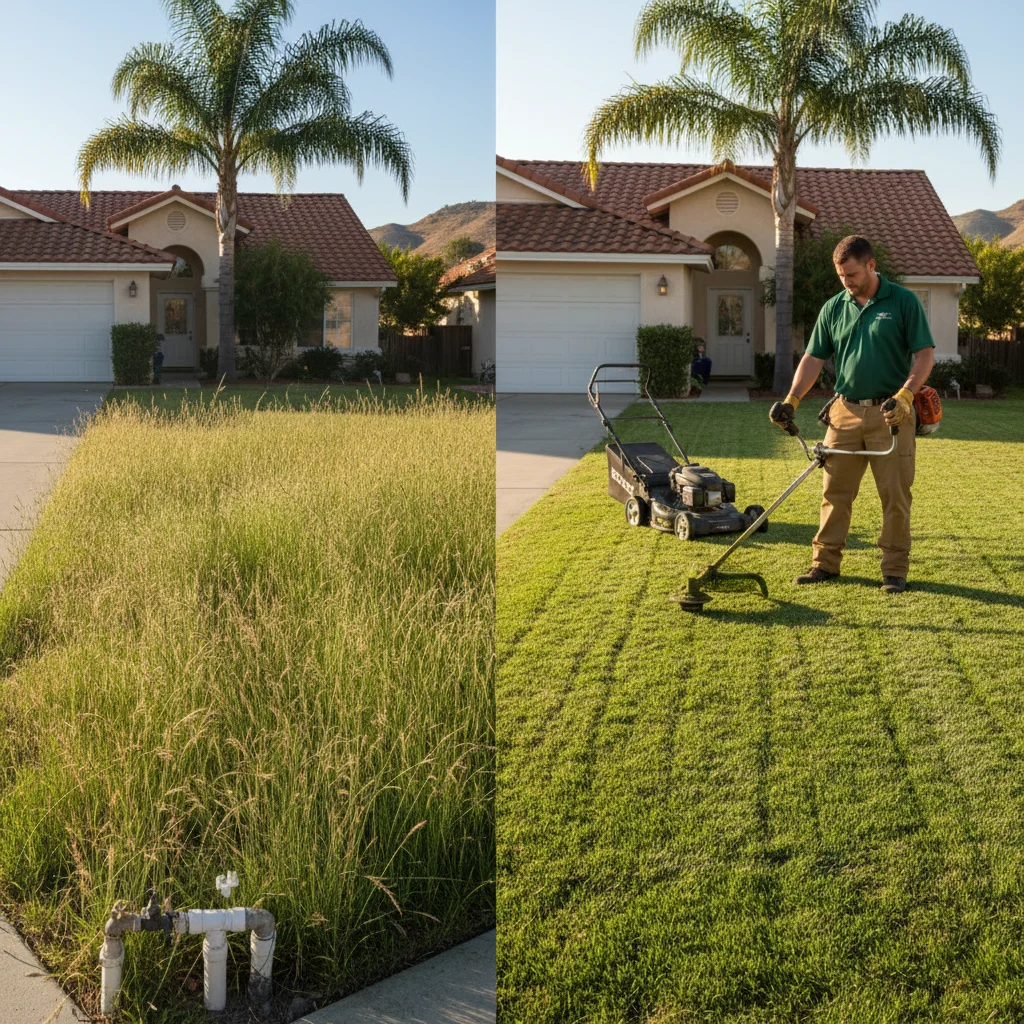
The truth is, while biweekly service can work in very specific situations, for most lawns in our mild, year-round growing climate, it can cause more harm than good.
The short answer for most San Diego lawns
For the vast majority of irrigated, healthy lawns across San Diego County, weekly mowing is the correct frequency. This isn’t an upsell; it’s based on the fundamental principle of turfgrass health known as the “one-third rule.” This rule states that you should never remove more than one-third of the grass blade’s total height in a single mowing.
When you cut off more than a third, you’re not just trimming the lawn—you’re scalping it. This sends the plant into shock. It drastically reduces the blade surface area available for photosynthesis, which is how the plant feeds itself. To recover, the grass has to tap into its root reserves, weakening the entire plant.
In San Diego’s climate, most popular grass types grow too quickly to stay within the one-third rule on a 14-day schedule, especially from March through October. A weekly cut maintains a consistent height, encourages the grass to grow thicker and denser, and keeps it from diverting energy to recover from a stressful, infrequent scalping. A deeper dive into [how often you should mow](/blog/how-often-mow-san-diego-lawn/) reveals just how crucial this timing is for long-term lawn health.
When biweekly works (and when it backfires)
While weekly is the standard, there are a few scenarios where biweekly lawn care in San Diego can be acceptable. However, the list of when it backfires is much longer and more severe.
Biweekly service can work if:
- It’s the dormant season: From roughly late November to February, grass growth slows considerably. During these cooler months, a biweekly schedule is often perfectly fine for Fescue and other cool-season grasses.
- Your lawn is water-stressed or non-irrigated: If you’re conserving water and your lawn isn’t growing much, mowing every two weeks might be sufficient.
- You have a very slow-growing turf in deep shade: Some fine fescues in heavily shaded areas may grow slowly enough to tolerate a biweekly cut.
Biweekly service usually backfires when:
- It’s the peak growing season: Trying to get by with biweekly cuts between March and October is a recipe for a stressed, unhealthy lawn.
- It creates excess clippings: Mowing two weeks of thick growth leaves behind heavy clumps of clippings. These clumps block sunlight, hold excess moisture, and can smother the grass beneath, creating dead spots and encouraging fungal diseases.
- It promotes weeds: A lawn that is consistently scalped and stressed becomes thin and weak. This is a perfect opening for opportunistic weeds like crabgrass, spurge, and nutsedge to invade and take over.
- It damages the turf: The cycle of excessive growth followed by a severe cut weakens the root system, making the lawn less resilient to heat, drought, and foot traffic.
Cost difference over a full year
The primary motivation for considering biweekly service is cost savings. While the per-month cost is lower, it’s important to look at the total value and potential hidden costs over a full year.
Let’s use some illustrative numbers. A professional biweekly visit takes more time and is harder on equipment than a weekly one, so the price isn’t simply half.
- Weekly Service Example: A typical weekly mow might cost $65. With an average of 4.33 weeks per month, your monthly cost is around $281. Annually, this is about $3,370.
- Biweekly Service Example: That same lawn might cost $90 per visit for a longer biweekly service. At two visits per month, your monthly cost is $180. Annually, this comes to $2,160.
The upfront savings look significant—around $1,200 per year. However, this doesn’t account for the potential long-term costs of repairing a lawn stressed by infrequent mowing. These can include:
- Increased fertilization: A stressed lawn needs more nutrients to recover.
- Weed control treatments: A thin, weak lawn will require more aggressive and costly weed control.
- Pest and disease treatments: Weakened turf is more susceptible to infestations.
- Aeration and dethatching: Improper mowing contributes to thatch buildup.
For a clearer picture of standard pricing, you can review our guide to [weekly lawn maintenance costs in San Diego](/blog/weekly-lawn-maintenance-cost-san-diego/). Often, the money saved on biweekly service is spent later on rehabilitating a struggling lawn.

Grass type matters: fescue vs bermuda vs kikuyu
San Diego’s unique climate allows for both cool-season and warm-season grasses, and their growth habits are completely different. Choosing your mowing frequency without considering your grass type is a critical mistake.
Fescue
Tall Fescue is the most common cool-season grass in our area because it can stay green all year. It grows upright and has its peak growth spurts in the spring and fall. During these periods, it absolutely needs weekly mowing to avoid scalping and stress. In the dead of winter or the peak heat of summer, its growth slows, and biweekly might be tolerable, but it’s a risky bet during the rest of the year.
Bermuda Grass
A heat-loving, warm-season grass, Bermuda thrives in the San Diego sun. From late spring through early fall, it grows aggressively, spreading through above-ground stolons and below-ground rhizomes. Putting Bermuda on a biweekly schedule in the summer is the fastest way to ruin it. The grass gets tall and leggy, and when you finally mow it, you cut off all the green blades, leaving a brown, stemmy, and scalped mess. It requires weekly cutting to encourage dense, lateral growth.
Kikuyu Grass
This is another warm-season grass known for its extreme vigor. It grows incredibly fast and can become puffy and unmanageable in just a few days. Biweekly mowing is simply not an option for a manicured Kikuyu lawn; it will always look overgrown and scalp easily.
To learn more about what’s growing in your yard, see our guide to the [best grass types for San Diego lawns](/blog/best-grass-types-san-diego-lawns/). For even more detailed local advice, the UC Master Gardeners of San Diego County is an excellent resource.
What you give up on biweekly visits
Choosing a [lawn maintenance service](/services/lawn-maintenance/) is about more than just cutting grass. It’s about having a trained set of eyes on your property regularly. When you stretch the time between visits to two weeks, you lose the benefit of consistent, proactive care.
With weekly visits, our crews spot and address small issues before they become big problems. On a biweekly schedule, a minor problem has 14 days to escalate.
Here’s what gets missed:
- Irrigation Issues: A broken sprinkler head or a clogged nozzle that goes unnoticed for two weeks can kill a section of your lawn while wasting hundreds of gallons of water.
- Early Signs of Disease: Fungal issues like brown patch can appear and spread rapidly in warm, humid conditions. Catching it in week one is a simple fix; dealing with it in week two can require major intervention.
- Pest Infestations: Grubs, sod webworms, or other pests can do significant damage in a short amount of time. Weekly observation is your first line of defense.
- Weed Outbreaks: A small patch of nutsedge can spread dramatically in 14 days. Early detection and treatment are far more effective and less costly.
Beyond the health of the turf, there’s the aesthetic. With weekly service, your lawn looks tidy and manicured all the time. On a biweekly plan, it looks great for 2-3 days after the service and then spends the next 10-11 days looking progressively shaggier.
How to switch between schedules seasonally
For homeowners who want to balance lawn health with budget, a hybrid approach can be the perfect solution. This strategy aligns your service frequency with your lawn’s natural growth cycle.
The Hybrid Plan:
- Weekly Service (March - October): During the eight months of active growth, commit to a weekly schedule. This is non-negotiable for warm-season grasses like Bermuda and highly recommended for Fescue. This ensures your lawn is healthy, dense, and resilient enough to handle summer heat.
- Biweekly Service (November - February): As temperatures cool and growth slows to a crawl, you can safely switch to a biweekly schedule. This saves money during the holiday season and winter months without putting the lawn’s health at risk.
The key to making this work is clear communication with your landscape provider. Let your crew know in late October that you’d like to switch to a biweekly winter schedule. They can adjust their routes accordingly. Then, in late February, confirm you’re ready to resume weekly service to prepare the lawn for its spring growth spurt. This proactive, seasonal approach is the smartest way to manage lawn care in San Diego.
When to call us
Deciding on the right lawn care schedule can be confusing. If you’re tired of guessing or want a consistently beautiful lawn without the work, it’s time to bring in a professional. We can evaluate your grass type, sun exposure, and soil conditions to create a maintenance plan that keeps your yard healthy and looking its best all year.
Call us at (858) 925-5546 for a same-day estimate.