Landscaping in Encinitas isn’t a one-size-fits-all job. A garden that flourishes in a quiet Olivenhain cul-de-sac might struggle on a bluff-top property overlooking Swami’s, and the needs in Leucadia are different still. Understanding these subtle but critical differences is the key to creating a landscape that not only survives, but thrives for years to come.
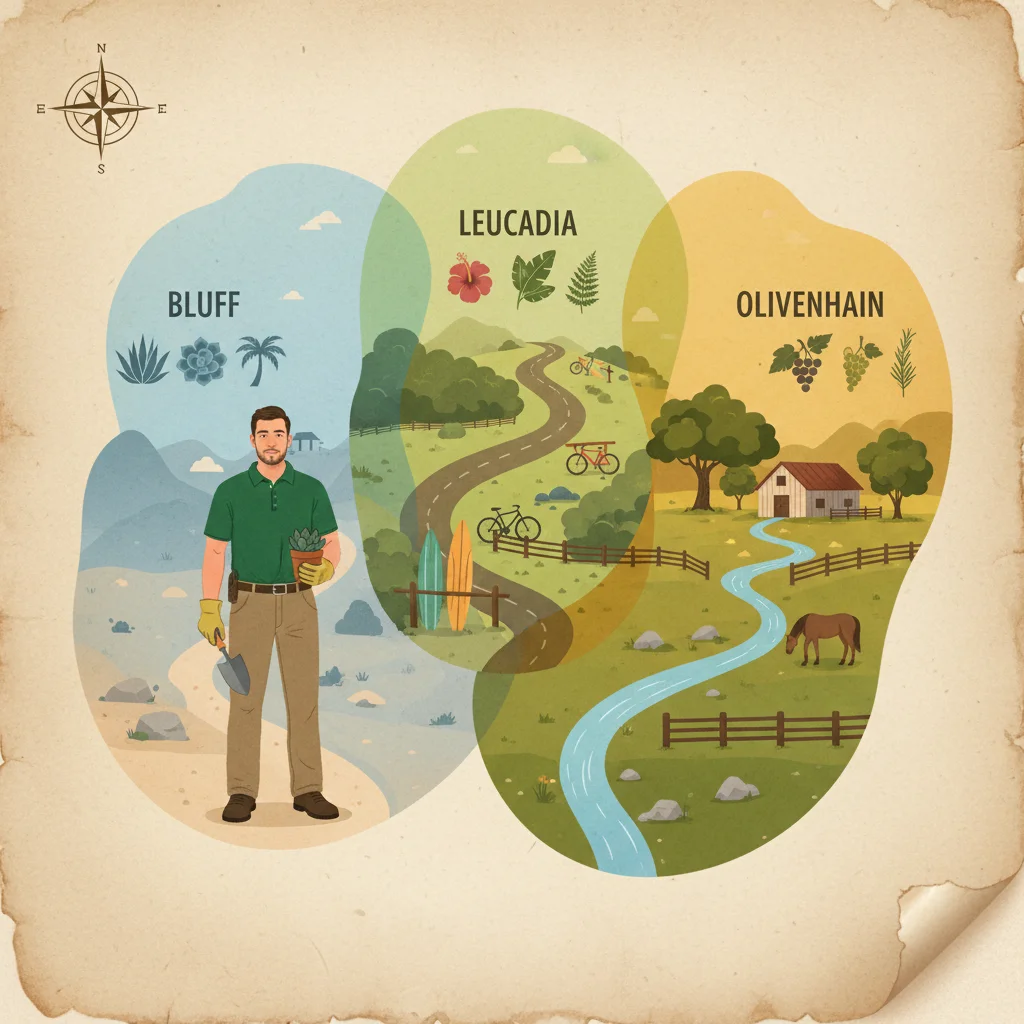
The Encinitas microclimate split: bluff vs Olivenhain vs Leucadia
It’s easy to think of Encinitas as one coastal town, but its topography creates several distinct microclimates that directly impact your yard. A plant that loves the consistent, mild temperatures of a bluff-top property may burn in the summer heat just a few miles inland. Knowing your zone is the first step in successful Encinitas landscaping.
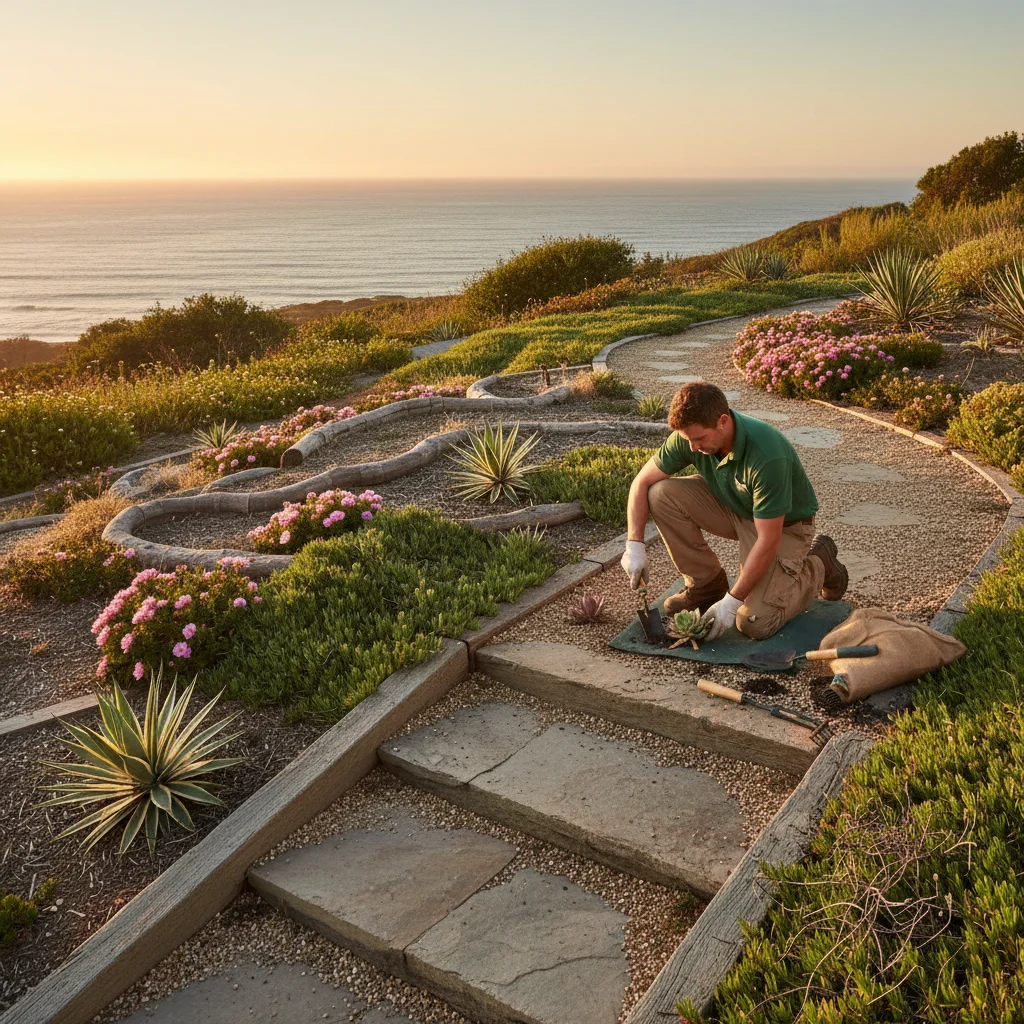
Bluff-Top & West of 101: This is the true coastal zone. It’s defined by the direct influence of the Pacific Ocean. You get a strong, often salt-laden onshore breeze, a persistent marine layer that moderates temperatures, and minimal frost risk. The biggest challenges here are wind and salt spray, which dictate everything from plant choice to the materials used for irrigation and lighting.
Leucadia & Central Encinitas: Just east of the 101 corridor, the ocean’s influence lessens slightly. You’ll still have coastal air and moderate temperatures, but with less direct salt spray and wind. This zone offers a bit more flexibility. You can introduce a wider variety of plants that might be too delicate for the immediate coast but can’t handle the inland heat. Successful Leucadia landscaping often involves blending tough coastal plants with more traditional garden favorites.
Olivenhain & Inland East: As you move east into Olivenhain, the climate shifts significantly. The coastal influence drops off, leading to hotter summer days and cooler winter nights. There’s more sun exposure without the marine layer, and far less wind and salt. This environment is much closer to what you’d find in Rancho Santa Fe or Escondido. An Olivenhain landscape design can support a completely different palette, including some citrus and other plants that need more heat to thrive.
Wind exposure and the plants that bend without breaking
For homes on the bluffs or in exposed west-facing areas, wind is a constant landscape architect. It doesn’t just knock over weak branches; it actively dehydrates plants through a process called transpiration, essentially “wind-burning” the leaves. The key is to select plants that are structurally adapted to these conditions.
Instead of fighting the wind with rigid, brittle plants, choose ones that are flexible or have a low profile. Think in terms of texture and form:
- Grasses and Grass-likes: Plants like New Zealand Flax (Phormium), Blue Fescue (Festuca glauca), and sedges (Carex) move with the wind instead of resisting it. Their fibrous leaves are built to flex.
- Low Mounding Shrubs: Groundcover Ceanothus, prostrate Rosemary, and Rockrose (Cistus) hug the ground. Their low center of gravity and dense structure help them withstand constant pressure.
- Tough, Waxy Leaves: Succulents are coastal champions. The waxy coating on the leaves of Agaves, Aloes, and Aeoniums helps them retain moisture and protects them from salt and wind.
Choosing the right drought-tolerant landscaping for the coast is about more than just saving water; it’s about selecting plants with built-in resilience. In Olivenhain, you have the luxury of choosing taller, more open-formed plants like Crape Myrtles or certain ornamental trees that would be shredded in a coastal-front yard.
Salt-air maintenance for irrigation hardware
Salt is corrosive. Over time, the salty marine layer that settles on every surface in coastal Encinitas can wreak havoc on your landscape infrastructure, especially metal irrigation components. This is an often-overlooked aspect of coastal landscaping that can lead to costly and frustrating failures down the line.
The primary victims are sprinkler heads, valve solenoids, and hose bibs. Cheap, pot-metal sprinkler bodies will corrode quickly, causing them to get stuck in the up or down position or develop leaks. Valve boxes can accumulate salty moisture, leading to the premature failure of electrical connections and solenoids. Even landscape lighting fixtures can suffer from corroded housings and sockets.
Here’s how to combat the salt:
- Choose Better Materials: Opt for brass or stainless steel sprinkler heads and nozzles whenever possible. They cost more upfront but last significantly longer than plastic or cheap metal in a salty environment.
- Regular Rinsing: During your gardening routine, take a minute to spray your sprinkler heads and valve boxes with fresh water from the hose. This simple step washes away accumulated salt deposits.
- Proactive Inspections: Don’t wait for a geyser in your front yard. Persistent salt exposure can lead to premature failure, making regular checks and timely irrigation repair crucial for coastal properties. A professional can spot the early signs of corrosion and replace parts before they fail catastrophically.
HOA-friendly drought-tolerant palettes that pass review
Many of Encinitas’s most desirable neighborhoods, from the Encinitas Ranch to parts of Olivenhain, are governed by a Homeowners Association (HOA). While HOAs help maintain property values, their architectural and landscape review committees can be a major hurdle when you want to update your yard. The key to success is a plan that is both beautiful and water-wise.
The biggest mistake homeowners make is assuming “drought-tolerant” means a barren landscape of cactus and gravel. This is exactly what HOAs fear. The goal for successful coastal HOA landscaping is to present a vision that looks lush, intentional, and well-maintained while using very little water.
Here are a few palettes that consistently pass review:
- Structured Modern: This style uses plants with strong architectural forms and clean lines. Think of groupings of Agave ‘Blue Glow’, Kangaroo Paw (Anigozanthos), and neatly clipped Westringia fruticosa (Coast Rosemary) hedges. It looks tidy and deliberate.
- Lush Mediterranean: This palette relies on silvery-green foliage and soft textures. Non-fruiting olive trees, Lavender, Lamb’s Ear (Stachys byzantina), and various sages create a full, romantic look that is extremely low-water once established.
- Colorful Coastal: For a vibrant look, you can use Leucadendron ‘Safari Sunset’ for deep reds, Blue Chalksticks (Senecio mandraliscae) for a striking silver-blue groundcover, and splashes of yellow from Bulbine frutescens.
Submitting a clear, professional plan is critical. A professional landscape design plan clearly communicates your vision, plant choices, and material selections, making the HOA approval process much smoother. It shows the committee you’ve thought through the project and are committed to a high-quality result.
Local rebate angle: San Dieguito and Olivenhain water districts
Saving water isn’t just good for the environment; it can also put money back in your pocket. Encinitas is primarily served by two water agencies: the San Dieguito Water District (SDWD) and the Olivenhain Municipal Water District (OMWD). Both agencies frequently offer rebates to incentivize residents to convert to water-wise landscapes.
These programs, often managed in partnership with the San Diego County Water Authority, can significantly offset the cost of a landscape renovation. The most common and valuable rebate is the turf replacement program. This program typically offers a certain dollar amount per square foot of lawn you remove and replace with a qualified low-water landscape.
Other available rebates may include:
- Smart Irrigation Controllers: Rebates for upgrading your old sprinkler timer to a new, weather-based “smart” controller that adjusts watering automatically.
- High-Efficiency Nozzles: Incentives for swapping out old, inefficient spray nozzles for new, multi-stream rotating nozzles that reduce runoff.
- Rain Barrels: Rebates for installing rain barrels to capture and reuse rainwater.
The first step is to check your water bill to confirm which district serves your property. Then, visit their website to see the current list of available rebates, application deadlines, and program requirements. The rules can be specific—requiring a certain number of plants per 100 square feet, for example—so it’s important to read them carefully. A landscape professional can help you design a project that not only looks great but also meets all the criteria to maximize your rebate.
When to call us
Navigating Encinitas’s unique microclimates, selecting plants that can handle wind and salt, designing a plan that will pass HOA review, and maximizing water district rebates can be complex. If your project involves more than just swapping out a few plants, it’s time to bring in a professional. We understand the specific challenges and opportunities of landscaping in every corner of Encinitas, from the bluffs to Olivenhain.
Call us at (858) 925-5546 for a same-day estimate.