You’ve put in the work to keep your lawn green and healthy, but one morning you spot them: unsightly brown patches marring your otherwise perfect turf. These dead spots can be frustrating, and in San Diego’s unique climate, the cause isn’t always obvious. Before you can find a solution, you need an accurate diagnosis.
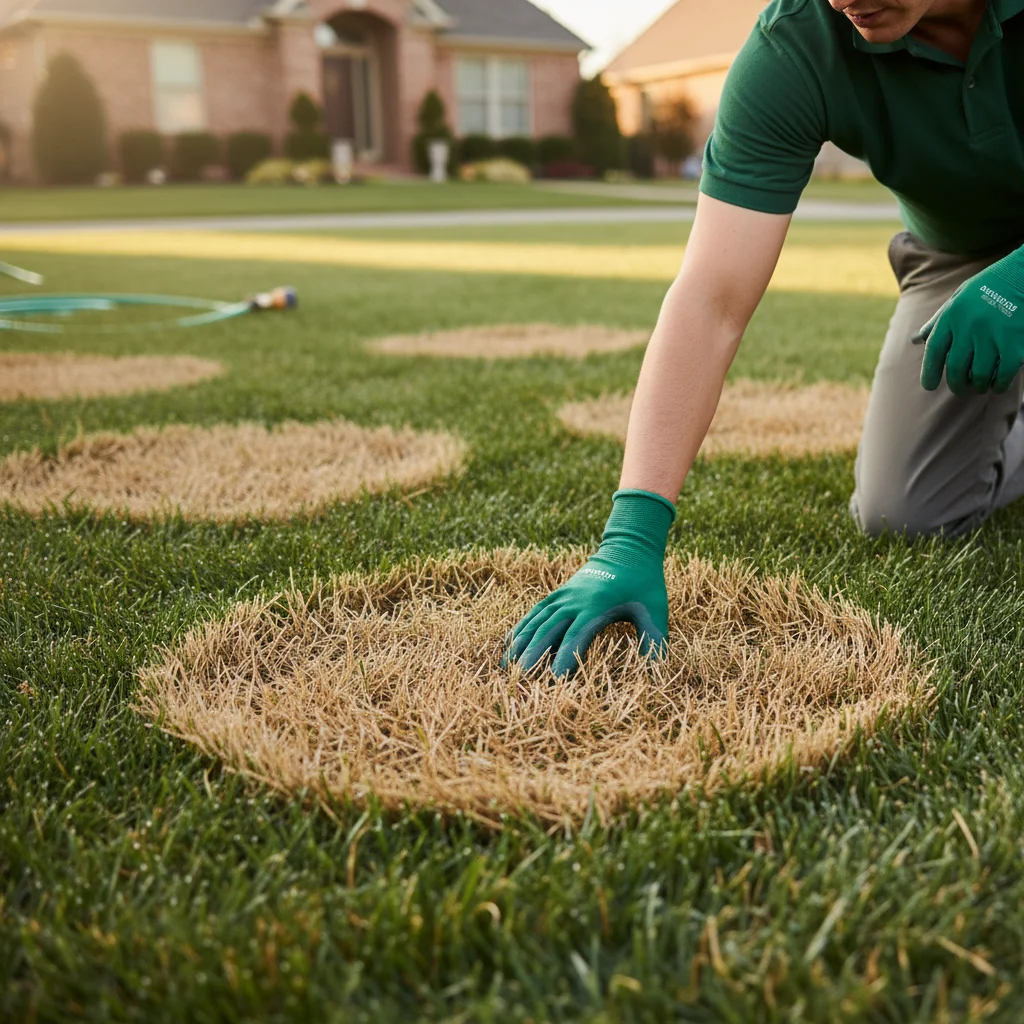
Dry spots vs disease vs grub damage: how to tell the difference
Brown patches in your lawn are symptoms, not the problem itself. The first step is to play detective and figure out which of the three main culprits is at work: water, disease, or pests. Each leaves behind distinct clues.
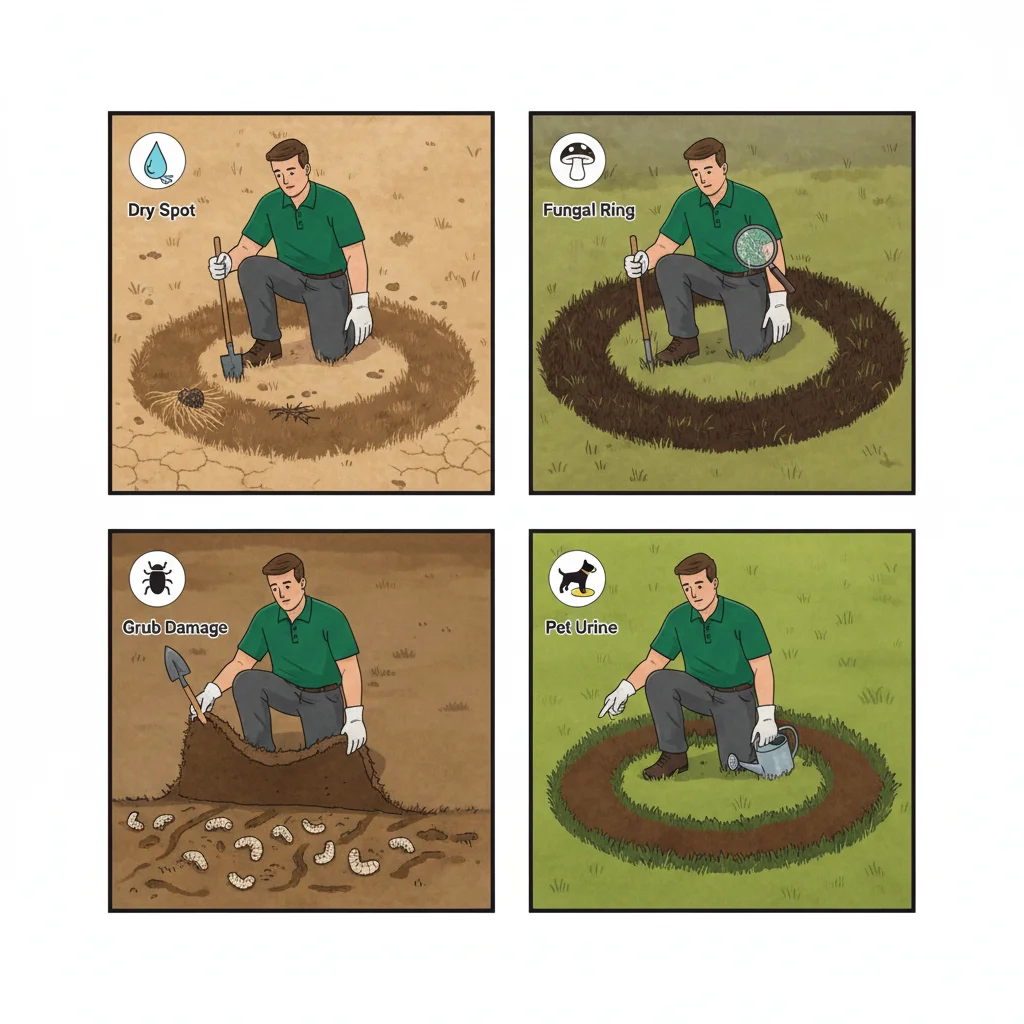
Dry spots (Drought Stress): This is a lack of water. The grass blades will look wilted, gray-green, and eventually turn a uniform straw-brown color. The ground beneath will be hard and dry to the touch. A simple test is to push a screwdriver into the brown patch and then into a nearby green area. If it’s significantly harder to push into the brown spot, you’re likely dealing with a dry spot. These patches often have a defined shape that might even match a sprinkler’s spray pattern—or lack thereof.
Fungal Disease: Lawn diseases often appear more structured. You might see distinct rings, circular patches with a darker outer border (sometimes called a “smoke ring”), or spots with visible legions or powdery residue on the grass blades themselves. The soil underneath a fungal patch is often moist, since damp conditions encourage fungal growth. The grass might feel slimy or greasy.
Grub & Pest Damage: If pests are the problem, the turf will feel spongy underfoot. The most telling sign of grub damage is that the dead patch will pull up easily, like a section of carpet. Because grubs eat the grass roots, there’s nothing anchoring the turf to the soil. You may even find the small, C-shaped white grubs in the soil just beneath the dead sod. This is a clear sign that you need to address an infestation. A consistent weekly lawn maintenance plan can help spot these issues early before they devastate an entire lawn.
Sprinkler coverage gaps — the most common SD culprit
Before you blame pests or disease, always check your irrigation system. In our sunny, often dry San Diego climate, improper watering is the number one cause of brown patches. Even a perfectly programmed sprinkler system can develop problems that lead to dry spots. Lawns need consistent, deep watering to thrive, and coverage gaps are the enemy of consistency.
Common culprits include:
- Clogged or Broken Sprinkler Heads: A single nozzle blocked by dirt or a head damaged by a lawnmower can leave a large triangular or circular patch of grass completely dry.
- Tilted Heads: Over time, soil settles and mowers bump heads, causing them to tilt. A tilted head sprays water over the sidewalk or into a hedge instead of onto your lawn.
- Poor Head-to-Head Coverage: Sprinkler systems are designed so the spray from one head reaches the next. If they are spaced too far apart or the pressure is too low, you get dry spots in the middle.
- Incorrect Nozzles or Pressure: Mismatched nozzles can cause uneven water distribution. Water pressure that’s too high creates mist that evaporates, while pressure that’s too low results in weak streams that don’t reach their target.
You can perform a simple “tuna can test” by placing several empty, flat-bottomed cans around your lawn and running your sprinklers for 20 minutes. Afterward, measure the water in each can. If some have significantly less water than others, you’ve found your coverage gaps. When troubleshooting reveals problems with heads, lines, or valves, a professional irrigation repair service is your best bet to ensure efficiency and compliance with local guidelines from entities like the San Diego County Water Authority.
Fungal disease in coastal humidity: rust, dollar spot, brown patch
San Diego’s coastal areas, with their “May Gray” and “June Gloom,” create the perfect humid, mild environment for fungal diseases to take hold. Overwatering, especially at night, poor drainage, and compacted soil can make things even worse. Three common fungal issues we see are Rust, Dollar Spot, and Brown Patch.
Lawn Rust: If you walk across your lawn and your shoes come away with an orange-yellow powder, you have rust. It weakens the grass but rarely kills it entirely. It’s most common on fescue and perennial ryegrass, especially when growth has slowed due to low nitrogen.
Dollar Spot: This disease appears as small, round, bleached-out or straw-colored spots about the size of a silver dollar. In the early morning, you might see a cobweb-like growth on the affected blades. These small spots can quickly merge into larger, irregular patches.
Brown Patch: True to its name, this disease causes large, roughly circular brown patches that can be several feet in diameter. It often features a grayish-brown “smoke ring” on the outer edge, which is most visible in the morning when there’s dew on the grass. Brown Patch thrives in hot, humid weather.
Fixing a fungal issue involves both treatment and prevention. You may need a targeted fungicide application. However, long-term health depends on changing the conditions that allowed the fungus to grow. This includes watering deeply but infrequently in the morning, improving air circulation by trimming nearby shrubs, and implementing a proper lawn fertilization & care program to keep your turf strong and resilient.
Grubs and chinch bugs in warm-season lawns
If your lawn feels spongy and pulls up like a rug, you almost certainly have grubs. These plump, C-shaped larvae of beetles like the Japanese Beetle or June Bug live in the soil and feast on grass roots. The damage they cause usually appears in late summer or early fall as irregular, dying patches that don’t green up with watering. Because the roots are gone, the turf can’t absorb water or nutrients, and it dies. A serious infestation can destroy an entire lawn in a matter of weeks.
Chinch bugs are another common pest, especially in warm-season grasses like St. Augustine and Zoysia. These tiny insects are hard to see, but their damage is obvious. They inject a toxin into grass blades while they feed, causing the grass to turn yellow, then reddish-brown, and die. Chinch bug damage often starts in the hottest, sunniest parts of the lawn and expands outward. To check for them, part the grass at the edge of a damaged area and look for small black or red insects near the soil surface.
Controlling these pests often requires targeted insecticides. Curative treatments can stop an active infestation, while preventative products applied earlier in the season can stop grubs before they hatch and begin feeding. A healthy, dense lawn is less susceptible to pest invasions, making proper mowing, watering, and fertilization your first line of defense.
Pet damage and salt spots near walkways
Sometimes the cause of brown spots is much closer to home—literally. Our furry friends and our hardscapes can both be sources of lawn damage.
Pet Damage: If you have a dog, you’re likely familiar with “Fido spots.” Dog urine is high in nitrogen and salts, which act like a concentrated dose of fertilizer. In small amounts, it can make the grass greener, but a direct, concentrated stream will burn the grass, killing it. The classic sign is a small dead patch with a very lush, dark green ring around the outside where the urine was more diluted. To fix it, flush the area with plenty of water immediately after your dog urinates to dilute the nitrogen. You can also train your dog to use a specific, non-turf area of your yard.
Salt and Chemical Damage: While we don’t use much de-icing salt in San Diego, salt damage can still occur. It’s most common near sidewalks and driveways where concrete runoff can alter soil pH. More frequently, we see damage from pool water splash-out. Both chlorine and saltwater pools can kill grass if enough water repeatedly splashes onto the same area. You might also see brown patches from accidental spills of gasoline, fertilizer, or herbicides. The solution for these spots is to first identify and stop the source, then flush the affected soil with water to leach out the contaminants before attempting to repair the turf.
When to repair vs reseed vs sod
Once you’ve diagnosed the cause of your brown patches and addressed the underlying issue, it’s time to fix the damage. Your approach depends on the size and severity of the problem.
Repair (for small spots): If you only have a few small spots less than six inches across, a simple patch-and-repair job is sufficient. First, use a hard rake to remove all the dead grass and thatch. Next, use a hand cultivator or trowel to loosen the top two inches of soil. Mix in a small amount of compost or quality topsoil, then sprinkle a pinch of grass seed that matches your existing lawn type. Lightly cover the seed with more soil, press it down firmly, and keep the area consistently moist until the new grass is established.
Reseed (for larger, thin areas): When damage is more widespread but not a total loss, overseeding is a great option. This involves spreading seed over the existing lawn to fill in thin areas and large patches. For best results in San Diego, this should be done in the spring or fall. It’s often paired with lawn aeration, which pulls small plugs of soil from the lawn to reduce compaction and allow seed, water, and nutrients to penetrate the soil more easily.
Sod (for extensive damage or instant results): If a large percentage of your lawn is dead or if you need an immediate green carpet, installing new sod is the best solution. While it’s the most expensive option, it provides an instant, mature lawn. Sod installation requires properly preparing the soil underneath by removing all the old turf, tilling, and adding amendments. Laying sod is labor-intensive and must be done correctly to ensure the roots establish well.
When to call us
Diagnosing and treating brown patches can be a frustrating process of trial and error. If you’ve tried the basics and your lawn still isn’t recovering, or if you’re facing a widespread disease or pest infestation, it’s time to call in a professional. We have the diagnostic tools and professional-grade products to identify the root cause and create an effective treatment plan to bring your lawn back to life.
Call us at (858) 925-5546 for a same-day estimate.