When your lawn is more brown patch than green grass, a complete reset feels like the only option. You start picturing a lush, uniform carpet of green, but one big question quickly follows: what does a new lawn actually cost? The price for professional sod installation in San Diego involves much more than just the price of the grass. It’s a project with several moving parts, each affecting the final number on your estimate.
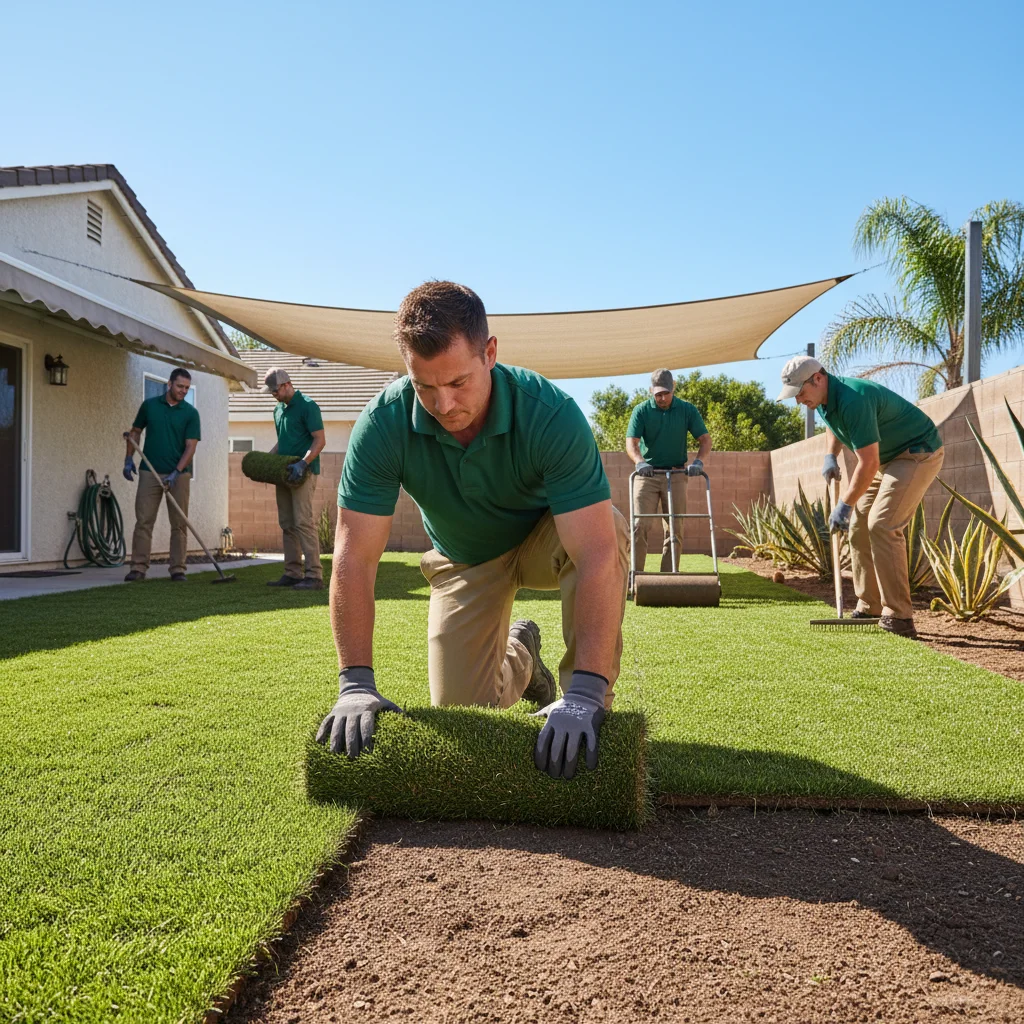
This guide breaks down the real costs for 2026, from the price of the sod itself to the essential prep work that makes or breaks a new lawn. We’ll look at pricing for the most common grass types in San Diego County, explain the factors that drive your bill up, and share real project examples from coastal, inland, and East County homes.
Per-square-foot pricing for fescue, bermuda, and St. Augustine sod
The first component of your new lawn cost is the sod itself. The price is based on the type of grass you choose, and it’s typically quoted per square foot. In San Diego, three types dominate the market, each suited to different microclimates and uses.
Here are the estimated material-only costs for 2026. Keep in mind these are for the sod rolls delivered on a pallet, not including labor, prep, or taxes.
Fescue: $1.10 - $1.60 per square foot
Tall fescue is the go-to cool-season grass for many San Diego homeowners. It stays green year-round, has a soft texture, and holds up well to foot traffic. It’s popular in coastal communities like Carlsbad and Encinitas where the marine layer helps it thrive. However, it requires more water than warm-season grasses, especially during hot inland summers. Its moderate price point makes it a balanced choice for many families.
Bermuda: $0.90 - $1.40 per square foot
Bermuda is a tough, drought-tolerant warm-season grass. It thrives in the heat of inland areas like Poway and Santee. It spreads aggressively, which helps it self-repair from damage caused by pets or kids. Bermuda is the most water-wise option for a traditional lawn, but it does go dormant and turn brown in the winter. It’s generally the most affordable sod option.
St. Augustine: $1.25 - $1.85 per square foot
St. Augustine is another warm-season grass known for its excellent shade tolerance compared to other turfgrasses. If you have large, mature trees casting shadows on your yard, this is often your best bet. It has wide, coarse blades and a rich green color. It’s a great choice for yards in areas like La Mesa or Chula Vista with mixed sun and shade. It is, however, the most expensive of the three and requires consistent care to prevent thatch buildup.
Choosing the right grass is about more than just price. To find the perfect fit for your home’s specific conditions, see our detailed guide to the best grass types for San Diego lawns.
Site prep that drives the bill: removal, grading, soil amendment
Buying the sod is the easy part. The real work—and a significant portion of the cost—is in preparing the ground for installation. A professional landscaper won’t just lay new sod over an old, dead lawn. Proper site preparation is the single most important factor for the long-term health of your new grass.
Here’s what goes into it:
Old lawn and weed removal
First, the existing turf, weeds, and debris must be completely removed. This is typically done with a sod cutter, a heavy machine that slices under the grass to remove it in strips. The old material is then hauled away for disposal. This is a labor-intensive process, and disposal fees add to the cost. Expect this to add $0.75 to $1.50 per square foot to your project total.
Grading and leveling
Once the area is cleared, the soil must be graded. Proper grading ensures that water drains away from your home’s foundation and prevents low spots where water can pool and cause root rot. For some properties, this is a simple process of raking and leveling. For others, especially on sloped lots common in San Diego, it might require bringing in or removing soil to create a gentle, consistent slope. Complex grading significantly increases labor time and costs.
Soil amendment
San Diego’s native soil is often heavy clay. Clay soil compacts easily, preventing water and air from reaching grass roots. To fix this, we amend the soil by tilling in several inches of high-quality organic compost and sometimes sand. This improves drainage, adds vital nutrients, and gives the new sod a healthy foundation to establish its root system. Skimping on soil amendment is a common mistake that leads to a struggling, unhealthy lawn down the road. This step can add another $0.50 to $1.00 per square foot, depending on how much new material is needed.
Irrigation rework when you’re switching grass types
A healthy lawn needs a properly designed and functioning irrigation system. When you replace your lawn, it’s the perfect time to assess and update your sprinklers. This is especially true if you’re switching between grass types with different watering needs.
For example, if you’re replacing a thirsty fescue lawn with water-wise Bermuda grass, your old sprinkler layout might be inefficient. Fescue needs frequent, shallow watering, while Bermuda develops deeper roots and does better with less frequent, deep watering. Simply running the old system could lead to overwatering, runoff, and a high water bill.
An irrigation rework might include:
- Replacing old, inefficient nozzles: Modern rotary nozzles and high-efficiency spray heads deliver water more evenly and reduce misting, saving a significant amount of water. We often recommend products that meet the EPA’s WaterSense standards.
- Adjusting head spacing: Sprinkler heads need to be spaced for head-to-head coverage, meaning one sprinkler’s spray reaches the next. We might need to move, add, or cap heads to match the new lawn area and grass type.
- Installing a smart controller: These weather-based controllers automatically adjust watering schedules based on local weather data, ensuring your lawn gets exactly what it needs without any waste.
- Repairing leaks: Even small leaks in underground pipes can waste thousands of gallons of water per year. We always perform a system check before laying new sod.
The cost for irrigation adjustments can range from a few hundred dollars for simple nozzle swaps to a few thousand for a more comprehensive overhaul. A professional irrigation repair and upgrade service ensures your investment in new sod is protected by an efficient watering system.
Delivery and labor differences across SD County
The final all-in price of your sod installation project is heavily influenced by logistics and labor. These costs can vary depending on where you live in San Diego County.
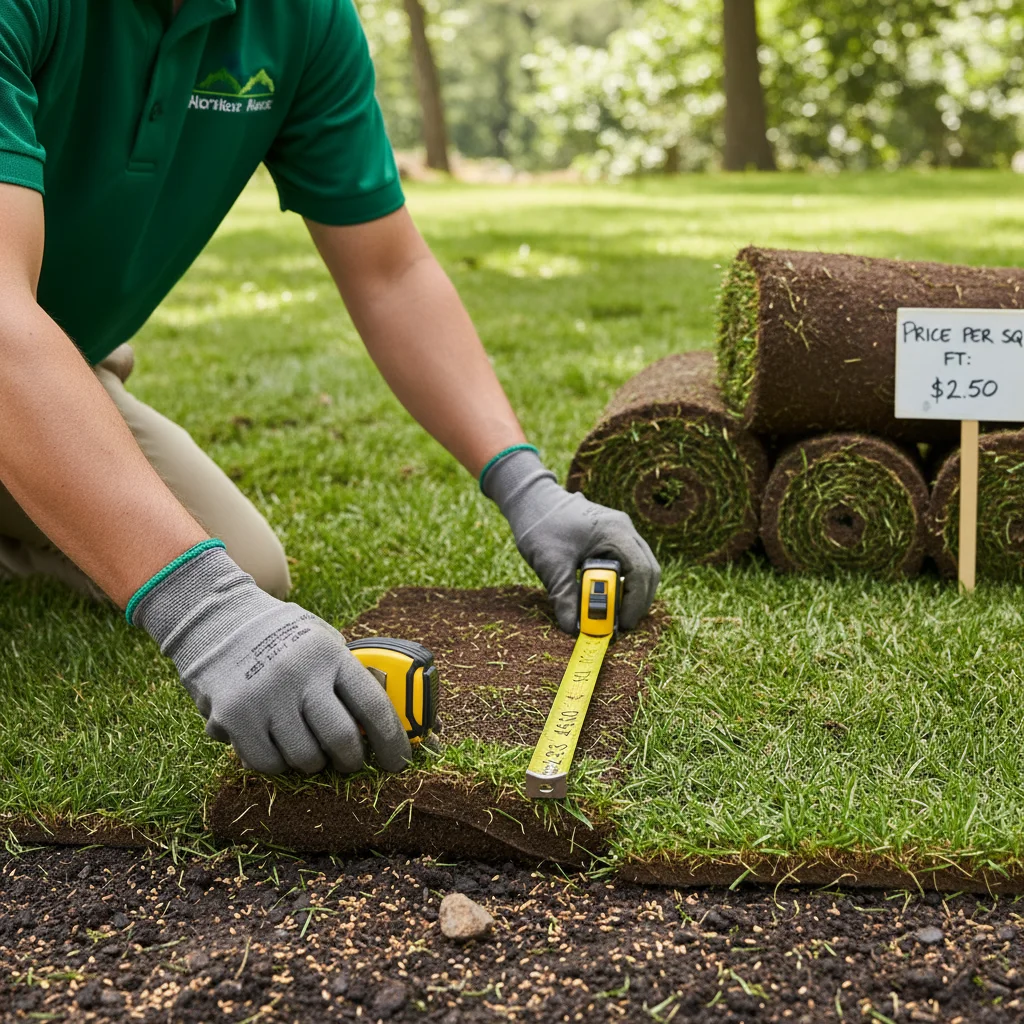
Sod is a living product that is harvested, shipped on pallets, and must be installed quickly—usually within 24-48 hours—to prevent the roots from drying out. It’s also extremely heavy. A single pallet can weigh over a ton. The distance from the sod farm to your home impacts the delivery fee, which can range from $100 to $300 or more.
Labor rates and accessibility are also major factors. The total labor cost is a function of the crew size and the number of hours required to complete the job. A straightforward, flat, easily accessible front yard in a neighborhood like Clairemont will have lower labor costs than a terraced backyard in La Jolla with multiple sets of stairs and narrow access gates. Our crews have to manually carry every roll of sod and every wheelbarrow of soil to the installation area, which takes more time and effort in challenging locations.
Generally, labor costs are slightly higher in the more affluent coastal and north county areas compared to East County. However, the biggest variable is always the complexity of the job site itself, not just the zip code. A project that requires extensive manual labor due to tight access will always cost more, regardless of location.
Rebate-funded turf removal vs sod replacement: when each makes sense
In a water-conscious place like San Diego, many homeowners wonder about turf removal rebates. The San Diego County Water Authority (SDCWA) and local water districts often offer financial incentives to replace grass with low-water landscaping like native plants, mulch, and drip irrigation.
It’s important to be clear: these rebates pay you to remove turf, not to replace it with new turf. You cannot get a rebate for installing new fescue or Bermuda sod.
So, when does each option make sense?
Turf removal with a rebate is the right choice if:
- Your primary goal is to drastically reduce your outdoor water use and lower your water bill.
- The lawn area is purely aesthetic and doesn’t get used for recreation.
- You want a very low-maintenance yard and are tired of mowing, fertilizing, and watering.
- You prefer the look of a drought-tolerant garden with succulents, native plants, and decomposed granite.
Sod replacement is the right choice if:
- You need a durable, usable surface for children or pets to play on.
- You value the cooling effect that a healthy lawn provides to your home and yard.
- The aesthetic of a traditional green lawn is important to your home’s curb appeal.
- Your property has a relatively small lawn area that doesn’t consume an excessive amount of water.
Ultimately, the decision comes down to lifestyle, budget, and priorities. Rebates are a fantastic tool for conservation, but a functional lawn is still the best choice for many San Diego families.
Real project ranges from coastal, inland, and east-county jobs
To bring all these numbers together, let’s look at a few examples of what a complete sod installation project might cost in different parts of San Diego County. These are all-in estimates for 2026, including materials, site prep, labor, and disposal.
Coastal Project: 800 sq. ft. Fescue Lawn in Encinitas
- Scope: Remove an old, patchy fescue lawn and replace it with new fescue sod. The area is flat and has good access. The existing irrigation system is in decent shape and only needs new nozzles.
- Sod Cost: 800 sq. ft. @ ~$1.35/sq. ft. = $1,080
- Prep & Labor: Removal, minor grading, soil amendment, and installation labor for this size job would run approximately $3,500.
- Irrigation: Simple nozzle replacement and tune-up adds around $400.
- Estimated Total: $4,900 - $6,200
Inland Project: 1,500 sq. ft. Bermuda Lawn in Poway
- Scope: Convert a large, dying front lawn to water-wise Bermuda grass. The project requires extensive removal of the old turf, moderate grading to fix drainage issues, and significant soil amendment for the clay soil.
- Sod Cost: 1,500 sq. ft. @ ~$1.15/sq. ft. = $1,725
- Prep & Labor: Because of the larger size and more intensive prep work, this portion of the job would be in the $6,000 - $7,000 range.
- Irrigation: Re-spacing a few heads and installing a new smart controller would add about $800.
- Estimated Total: $8,500 - $10,500
East County Project: 500 sq. ft. St. Augustine in a Shady La Mesa Backyard
- Scope: Install a small St. Augustine lawn in a backyard area with large oak trees. Access is difficult through a narrow side gate. The soil is heavily compacted and requires a lot of amendment.
- Sod Cost: 500 sq. ft. @ ~$1.60/sq. ft. = $800
- Prep & Labor: Even though the area is small, the difficult access and heavy soil work increase labor hours. Prep and labor would be around $3,000.
- Irrigation: The existing sprinklers need to be converted to a more shade-appropriate setup, costing about $500.
- Estimated Total: $4,300 - $5,500
As you can see, the square footage is just one part of the equation. Site conditions, access, and the level of prep work required are the true drivers of the final cost.
When to call us
A sod installation project is a complex job that requires heavy equipment, knowledge of soil science, and irrigation expertise. While it may seem straightforward, improper grading can lead to drainage problems, and poor soil prep will result in a lawn that fails to thrive. For a healthy, long-lasting lawn, it’s best to work with an experienced and licensed landscape contractor.
If you’re ready to transform your yard with a beautiful new lawn, we can provide a detailed, itemized estimate that covers every step of the process.
Call us at (858) 925-5546 for a same-day estimate.