Picking a grass type for a San Diego yard isn’t one decision — it’s four or five decisions stacked on top of each other. Your microclimate, your water bill tolerance, how much foot traffic you get, and whether you’re two miles from the ocean or tucked into a Santee cul-de-sac all change the answer.
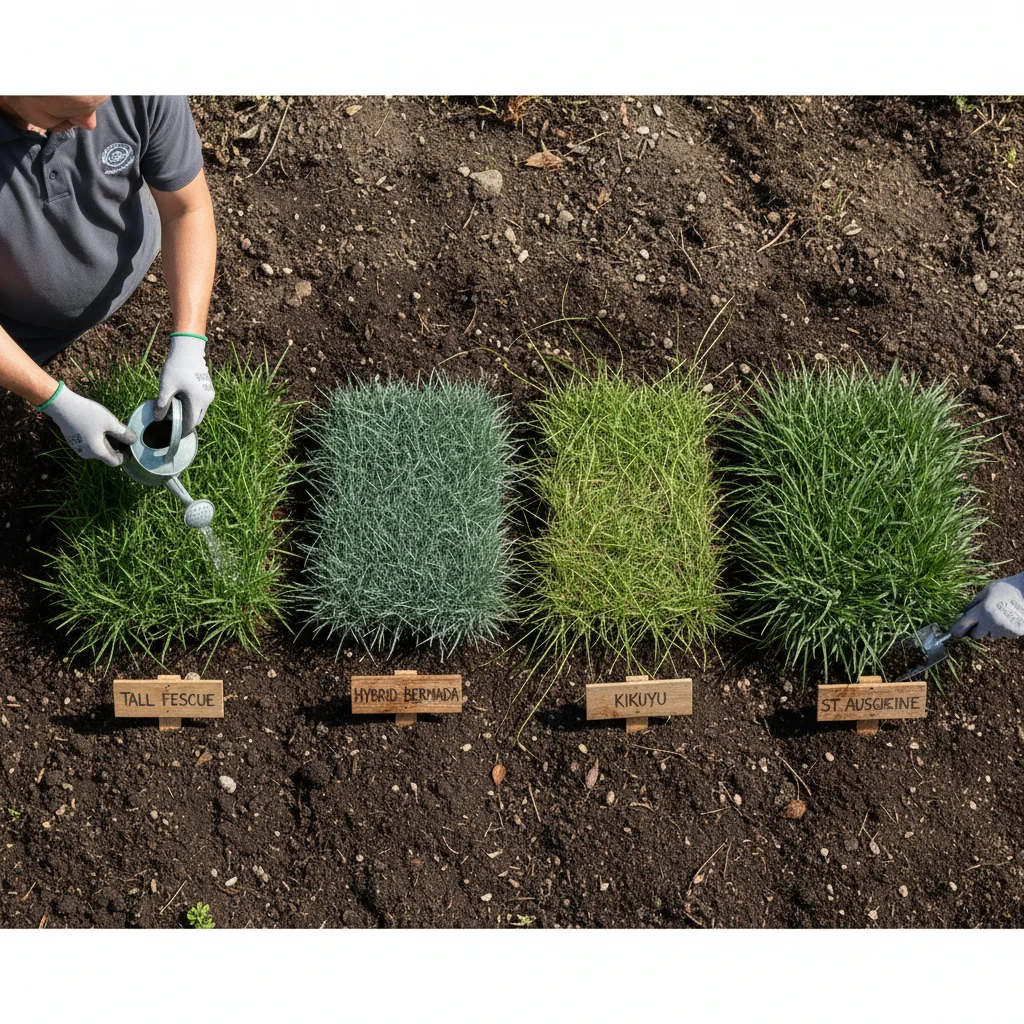
Coastal vs inland: which grass survives where
San Diego County packs more climate variation per mile than almost anywhere in California. La Jolla and Carlsbad stay cool and foggy most of the summer — night temps rarely crack 70°F. Fifteen miles east in El Cajon or Santee, you’re looking at 95°F afternoons and a dry Santa Ana season that runs well into October.
That gap matters enormously for turf. Cool-season grasses like tall fescue thrive along the coast, where mild summers let them stay green without burning out. The moment you push inland past the 15 freeway, fescue starts showing stress by July unless you’re running your irrigation hard.
Warm-season grasses — bermuda, kikuyu, St. Augustine — run the opposite pattern. They love heat and go dormant (turn tan) in the mild coastal winters, which most coastal homeowners hate. Inland, that same dormancy is a brief, manageable tradeoff for a grass that stays alive without constant watering during peak heat.
The UC Master Gardeners of San Diego County break the county into three broad climate zones for turf selection: coastal, transition, and inland. If you’re unsure which zone your address falls into, your zip code is usually enough to sort it out — or ask your landscaper before you buy sod.
A few other coastal-vs-inland factors: salt air tolerance (bermuda handles it well, fescue less so), fog drip supplementing irrigation near the coast, and wind exposure on mesa-top properties that accelerates soil drying regardless of grass type.
Tall fescue: the cool-season default and its water cost
Tall fescue is the most common lawn grass in San Diego, and it’s easy to see why. It stays green all year along the coast. It handles moderate shade. It looks like the “normal” lawn that homeowners picture when they think of a nice yard. Seed is cheap, and sod is widely available.
The catch is water. Tall fescue is a cool-season grass with a relatively shallow root system, and it needs consistent moisture to stay green during San Diego’s dry summers. According to San Diego County Water Authority data, a 1,000-square-foot cool-season lawn typically needs around 35–40 inches of applied water per year in San Diego County — roughly 20,000–22,000 gallons.
At current City of San Diego tiered water rates, a 2,000-square-foot fescue lawn can easily add $600–$900 per year to a water bill, sometimes more if the irrigation schedule isn’t dialed in. That number climbs fast with poor sprinkler coverage or overwatering.
Fescue also gets summer patch disease and dollar spot fungus in humid microclimates — common near the coast in August and September. And it needs dethatching every year or two, plus consistent fertilization to hold its color. If you’re already running weekly lawn maintenance, those tasks fold in naturally. If you’re not, they add up.
Bottom line on fescue: great fit for coastal San Diego yards where you want year-round green and are willing to pay for the water. A harder sell anywhere east of Interstate 15 once summer heat arrives.
Hybrid bermuda: warm-season winner for sun and traffic
Hybrid bermuda — varieties like Tifway 419 or TifTuf — is the workhorse of San Diego’s warmer neighborhoods. It’s what you’ll find on most golf courses, sports fields, and drought-conscious residential yards from Chula Vista to Escondido.
It handles full sun aggressively well. It repairs itself through stolons and rhizomes, so wear damage from kids and dogs fills back in without reseeding. And its water demand is significantly lower than fescue — UC Cooperative Extension research puts bermuda ET replacement needs roughly 20–30% lower than tall fescue under comparable San Diego summer conditions.
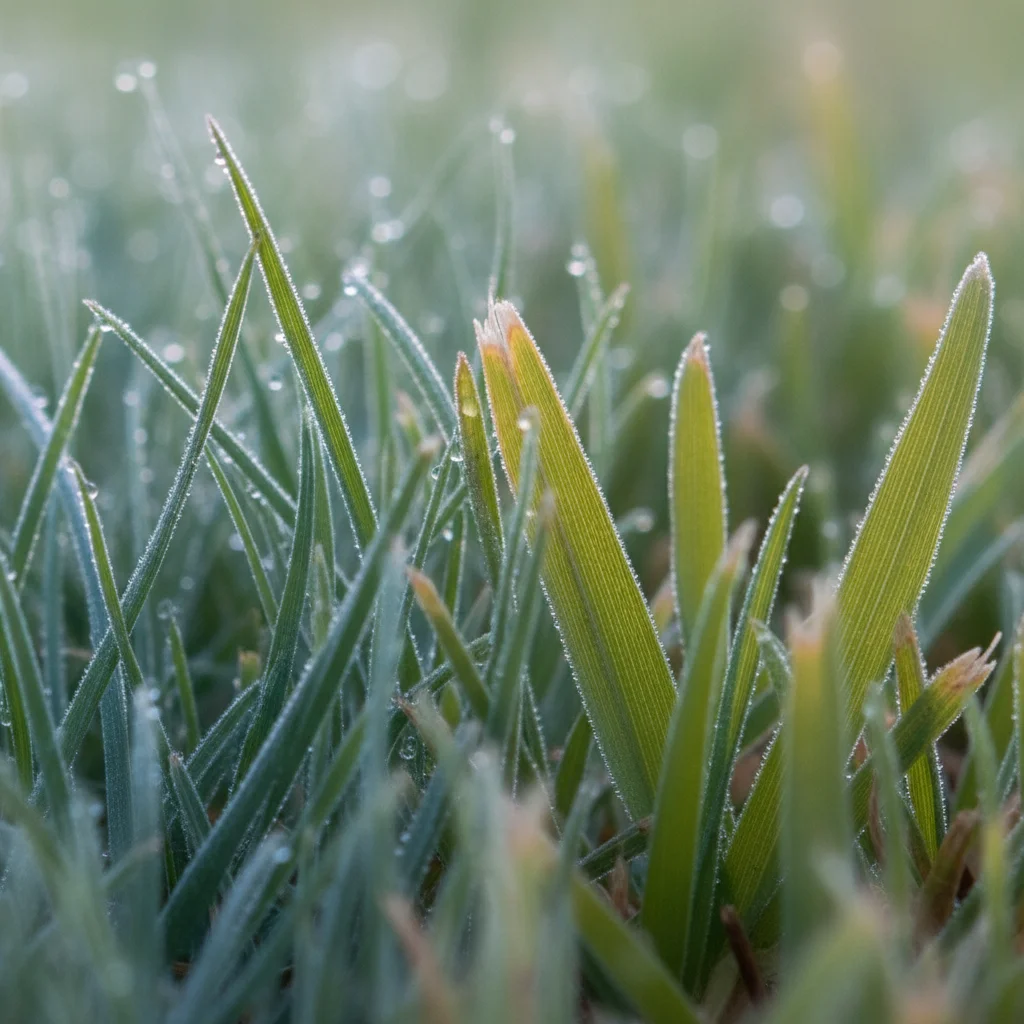
The drawbacks are real. Bermuda needs full sun — 6+ hours minimum, preferably 8. In shaded yards or under large trees, it thins out fast. It goes dormant and turns brown when temperatures drop below around 50°F consistently, which means coastal yards see a tan lawn from December through February or March.
Bermuda is also aggressive. It spreads by stolon and will invade planting beds, sidewalk cracks, and neighboring lawns if you don’t maintain a clean edge. Weekly lawn maintenance with a dedicated edging pass keeps it contained.
For sod installation projects, hybrid bermuda is typically one of the lower-cost sod options — usually $0.35–$0.60 per square foot for sod at the nursery level — and it establishes quickly in warm weather. If you’re replacing a dead fescue lawn in an inland San Diego neighborhood, hybrid bermuda is usually the first variety we’d recommend evaluating.
Kikuyu and St. Augustine: the underdogs that fit specific yards
These two don’t get as much attention as fescue or bermuda, but they’re genuinely the right call in specific situations.
Kikuyu grass
Kikuyu (Pennisetum clandestinum) is a warm-season, aggressive spreader that originally came from East Africa. It’s drought-tolerant once established, handles coastal temperatures without going fully dormant, and recovers from wear quickly. Along the San Diego coast — think Oceanside, Encinitas, Pacific Beach — it can stay green most of the year with moderate irrigation.
The problem: kikuyu is extremely invasive. It spreads by stolons, rhizomes, and seed. Once it’s in your lawn, it’s in your lawn. It’ll colonize garden beds, climb through irrigation heads, and establish in adjacent yards. Some San Diego landscapers won’t install it for that reason.
If your yard is already kikuyu (more common than you’d think in older coastal neighborhoods), the question becomes management, not installation. Consistent mowing at 1.5–2 inches and sharp edging keeps it presentable.
St. Augustine grass
St. Augustine (Stenotaphrum secundatum) is the shade-tolerant warm-season grass. If you have a yard with mature trees and you want something other than fescue, St. Augustine — specifically the ‘Palmetto’ or ‘Seville’ varieties — handles 30–40% shade better than bermuda can.
It’s coarser-bladed than bermuda or fescue, which some homeowners dislike aesthetically. It’s also more susceptible to chinch bugs and requires consistent irrigation; it doesn’t handle drought as gracefully as bermuda. But for a warm-inland yard under a mature oak or near a covered patio, it’s often the only warm-season grass that stays reasonably dense.
St. Augustine sod is less commonly stocked at San Diego nurseries, so lead time for sod installation projects can run longer. Plan accordingly.
Water-use rankings and what each grass actually costs per year
Here’s a straightforward ranking from lowest to highest annual water demand for a San Diego yard, based on UC Cooperative Extension evapotranspiration data and SDCWA conservation benchmarks:
- Hybrid bermuda — lowest. Roughly 25–30 inches of applied water per year. Deep roots, high drought tolerance once established.
- Kikuyu — close to bermuda, slightly higher due to aggressive growth requiring more inputs overall.
- St. Augustine — moderate. Needs consistent moisture, especially in summer heat.
- Tall fescue — highest. 35–40 inches per year or more in hot inland areas.
On a 1,500-square-foot lawn at current San Diego water rates, the annual gap between fescue and bermuda is roughly $200–$400 per year in water costs alone. Over ten years, that’s real money — and it doesn’t account for fertilizer, aeration, or overseeding costs that fescue typically requires and bermuda doesn’t.
For a deeper look at how water rates affect lawn economics, our post on San Diego water rates and lawn economics breaks down the math neighborhood by neighborhood.
The EPA WaterSense program also notes that switching from cool-season to warm-season turf is one of the highest-impact water conservation moves a homeowner can make in arid climates — more impactful than switching sprinkler heads alone.
When to switch grass types vs replace with drought-tolerant
Switching grass types makes sense when your yard genuinely needs turf — kids and dogs who use it constantly, a homeowner who values that look, a rental property where HOA rules require maintained lawn. In those cases, the right grass type for your microclimate is worth the investment. A bermuda or kikuyu conversion in an inland yard can cut your water bill and your maintenance time simultaneously.
But if you’re watering a lawn that nobody uses — a front parkway strip, a side yard that gets no foot traffic, a slope that’s more irrigation problem than lawn — switching grass types is solving the wrong problem. That’s where drought-tolerant landscaping often makes more financial sense than any grass variety. Our guide to drought-tolerant plants in San Diego covers which species perform well by microclimate if you want to start exploring that direction.
The SoCal WaterSmart program also offers turf replacement rebates — up to $2 per square foot in some service areas — for converting irrigated turf to drought-tolerant landscaping. That rebate changes the math significantly for larger lawn areas.
If your current lawn is patchy, diseased, or going into its third expensive summer of overseeding and irrigation repair, it’s worth getting a professional assessment before you replant anything. Sometimes the soil, grading, or irrigation coverage is the actual problem — not the grass variety.
When to call us
Choosing the right grass type is half the work — installing it correctly and giving it the best start is the other half. Grading, soil prep, irrigation coverage, and installation timing all affect whether new sod takes hold or fails within the first season. Call us at (858) 925-5546 for a same-day estimate.