Figuring out exactly how long to run your sprinklers in a San Diego summer can feel like a guessing game. Water too little and you get brown patches; water too much and your bill skyrockets while runoff flows down the street. We’re going to give you specific, no-nonsense numbers to use as a starting point for keeping your lawn healthy without wasting water.
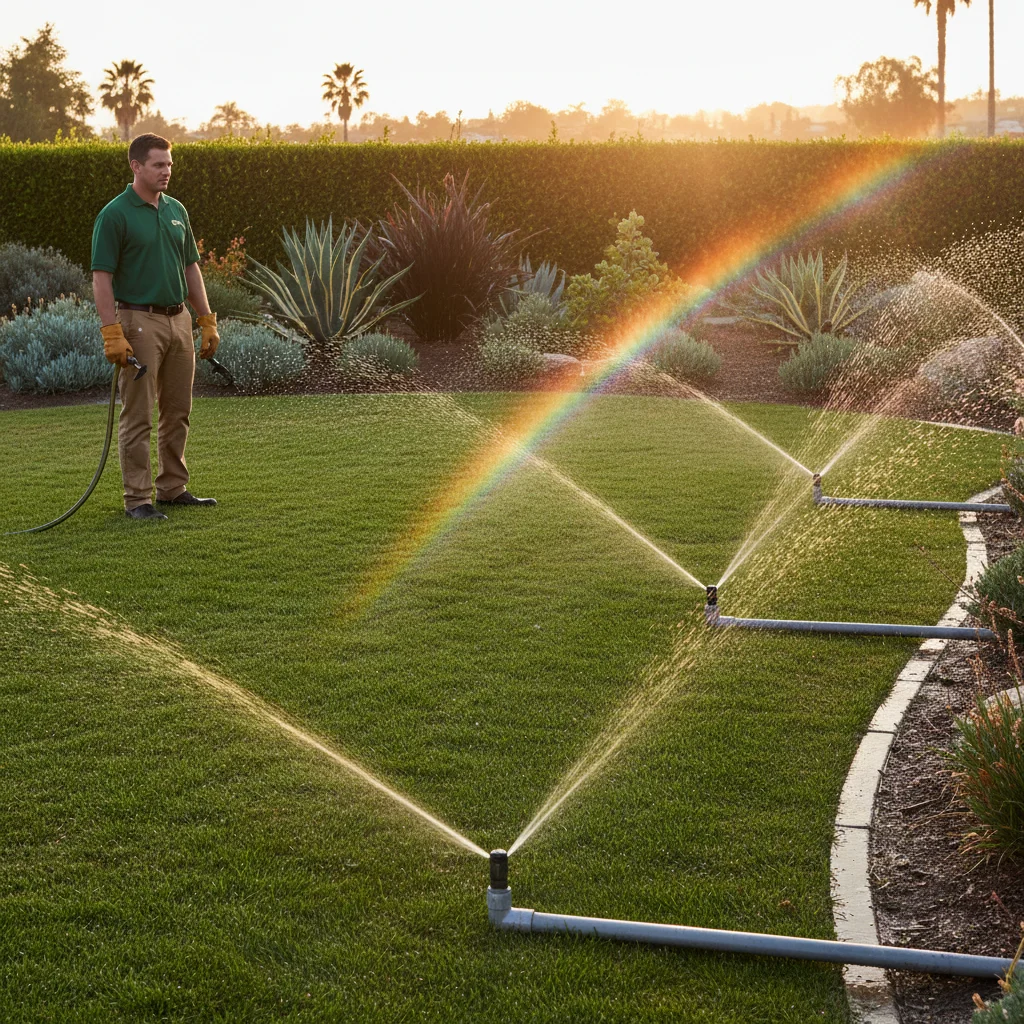
The short answer by grass type
Your lawn’s thirst depends heavily on the type of grass you have. San Diego landscapes feature both cool-season and warm-season grasses, and they have very different needs once the summer heat arrives.
Cool-Season Grass (Fescue, Ryegrass)
These grasses look great most of the year but struggle in our hot, dry summers. They don’t go dormant; they just get stressed. Because they’re working hard to stay green, they need more frequent watering.
- Watering Days: 3 days per week.
- Goal: Aim to apply about 1 to 1.5 inches of water total per week. This means deep, thorough watering on your allowed days to encourage roots to grow down, away from the hot surface. Inland areas like Poway or El Cajon may need the higher end of this range compared to coastal Carlsbad.
Warm-Season Grass (Bermuda, St. Augustine, Kikuyu)
These are the champs of San Diego summers. They thrive in the heat and are much more drought-tolerant than their cool-season cousins. They can handle a little less water, but they still need it consistently to look their best.
- Watering Days: 2-3 days per week.
- Goal: Aim for about 1 inch of water total per week. The key here is deep and infrequent watering. A longer soak twice a week is far better than a short, shallow sprinkle every other day. This trains the roots to seek water deep in the soil, making the turf more resilient.
These are just starting points. The real magic is in adjusting for our unique coastal climate and your specific irrigation hardware.
How San Diego’s June Gloom changes the math
Anyone who has lived here for a summer knows about May Gray and June Gloom. That persistent marine layer isn’t just a mood—it’s a critical factor in your watering schedule.
The cloudy, cool, and often misty conditions dramatically reduce evaporation from your soil. Your lawn simply doesn’t lose as much water to the atmosphere when the sun isn’t beating down. During these months, you can—and should—reduce your watering.
A good rule of thumb is to dial back your controller’s “seasonal adjust” setting to 70-80% of its peak summer schedule. If you typically water for 10 minutes, try 7 or 8. You might even find you can skip one of your watering days entirely if the gloom is particularly thick.
The reverse is true later in the summer. From August through October, when the sun is intense and dry Santa Ana winds can kick up, your lawn will lose moisture much faster. During these periods, you’ll need to run your system at 100% of its schedule (while still following local restrictions) to prevent the turf from drying out. Ignoring our coastal microclimates is one of the fastest ways to over or underwater a San Diego lawn.
Minutes per zone for spray, rotor, and drip
The type of sprinkler head in each zone determines how long you need to run it. Different heads put out water at vastly different rates. Mixing types in one zone is a common problem that leads to both wet and dry spots.
Spray Heads (Fixed Pop-ups)
These are the most common heads, delivering a fixed fan of water. They put out a lot of water fast, which means shorter run times.
- Typical Run Time: 6-10 minutes per session.
- San Diego Pro Tip: Our region’s clay-heavy soil can’t absorb water that quickly. To avoid runoff, use the “cycle and soak” method. Instead of one 8-minute run, program two 4-minute runs with an hour break in between. This gives the water time to soak deep into the soil.
Rotor Heads (Gear-driven or Impact)
These heads rotate, shooting streams of water across a larger area. They apply water much more slowly and uniformly than spray heads, making them ideal for large lawns and gentle slopes.
- Typical Run Time: 25-40 minutes per session.
- San Diego Pro Tip: Because their application rate is so low, you usually don’t need to worry about cycle and soak. Just let them run. A quick visual check to ensure they’re rotating correctly and not stuck is a good idea. A single broken rotor can devastate a section of your lawn. If you see dry arcs, it may be time for an irrigation repair call.
Drip Irrigation
Used for garden beds, trees, and shrubs, drip systems are the most efficient method, applying water directly to the root zone.
- Typical Run Time: 45-90 minutes per session.
- San Diego Pro Tip: Drip systems are highly effective but only need to run once or twice a week at most. Their slow delivery means almost zero water is lost to evaporation, which is a huge benefit in our dry climate.
Watering days under current restrictions
San Diego County is always focused on water conservation, and mandatory restrictions are a fact of life. These rules can change based on drought conditions, so it’s critical to know the current regulations for your specific water district.
You can find the most up-to-date information directly from your provider. For residents in the city, the City of San Diego’s watering schedule is your official source. Most other residents fall under the San Diego County Water Authority, which provides guidance for its member agencies.
Generally, restrictions dictate:
- How many days you can water per week (usually 2 or 3).
- Which days you can water (often assigned by odd/even address).
- What times you can water (typically prohibiting watering during the hottest part of the day, from 10 a.m. to 6 p.m., to reduce evaporation).
The key takeaway is that you cannot simply water whenever you want. Your schedule must be built around your assigned days. This reinforces the importance of deep, infrequent watering. You need to deliver the lawn’s entire weekly water requirement within those two or three permitted sessions. Sticking to the rules isn’t just about avoiding fines; it’s about being a good steward of our limited resources and managing the high San Diego water rates that impact your lawn’s economics.
Signs you’re overwatering (and underwatering)
Your lawn will give you clear signals when its water supply isn’t right. Learning to read them can help you fine-tune your schedule and catch problems before they get serious. Our weekly lawn maintenance crews are experts at spotting these subtle cues.
Signs of Underwatering
- Color Change: The grass will lose its vibrant green and take on a dull, smoky, or bluish-gray tint.
- The Footprint Test: Walk across your lawn. If your footprints remain pressed down for more than a few seconds, the grass blades don’t have enough moisture to spring back up.
- Hard Soil: If the ground is cracked or you can’t easily push a screwdriver 4-6 inches into the soil, it’s too dry.
Signs of Overwatering
- Runoff: The most obvious sign. If water is running off your lawn and onto the sidewalk before the cycle finishes, you’re applying it too fast for the soil to absorb.
- Spongy Turf: The lawn feels squishy or soggy underfoot long after you’ve watered.
- Fungus and Mushrooms: A consistently damp environment is a breeding ground for lawn diseases, fungus, and mushrooms.
- Weed Invasion: Many weeds, especially nutsedge, thrive in overly wet conditions where healthy grass struggles.
Smart controller settings that save the most
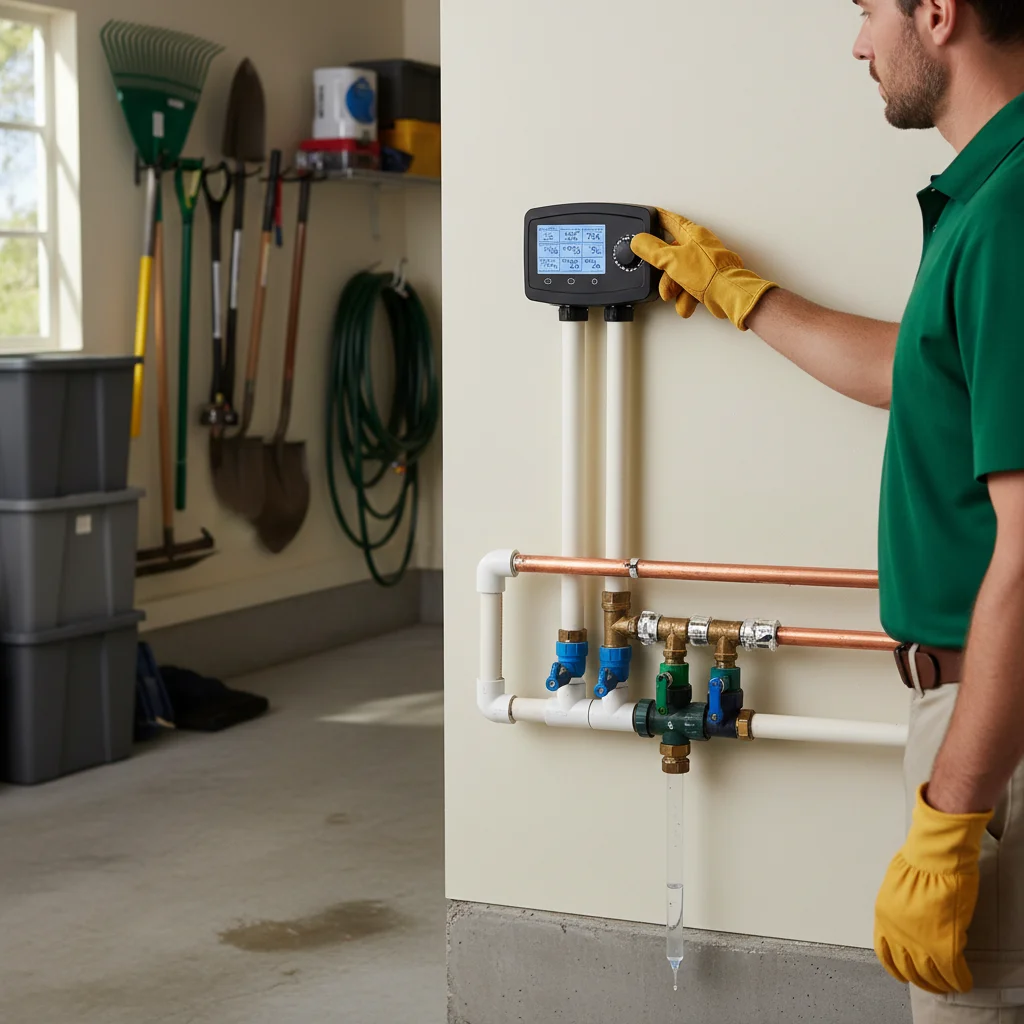
A “smart” irrigation controller is one of the best investments you can make for a San Diego property. These devices use real-time local weather data to automatically adjust your watering schedule, ensuring the lawn gets exactly what it needs and not a drop more. But they’re only as smart as their setup.
To get the most savings, you must configure the basic parameters for each zone correctly:
- Sprinkler Type: Tell the controller if the zone uses spray, rotor, or drip heads. This dictates the base run time.
- Plant Type: Select “cool-season grass,” “warm-season grass,” “shrubs,” etc. This tells the controller how much water the plants in that zone need to thrive.
- Soil Type: This is crucial for San Diego. Most of our area is heavy clay. Selecting “clay” will automatically encourage the controller to use cycle and soak watering to prevent runoff.
- Exposure: A lawn in full, blistering sun needs more water than one in the shade of an old oak tree. Tell the controller how much sun each zone gets.
If you don’t have a weather-based controller, use your existing controller’s “seasonal adjust” or “water budget” feature. Set your peak summer schedule (for August), and then use the adjust feature to dial it back during May/June (70-80%) and ramp it up as the heat builds.
Properly configured smart controllers, certified by programs like the EPA’s WaterSense, are proven to make a huge difference. In fact, a tuned-up system is one of the biggest factors in calculating water savings from irrigation repairs and upgrades.
When to call us
Trying to balance grass type, sprinkler output, soil conditions, and city rules can be overwhelming. If you’re struggling with persistent dry spots, constant runoff, or a water bill that seems too high, your irrigation system probably needs a professional audit. We can identify inefficiencies, fix broken components, and program your controller to match your landscape’s precise needs.
Call us at (858) 925-5546 for a same-day estimate.