Deciding on the right grass for your San Diego lawn feels like a big commitment. You want a lush, green space that stands up to our unique climate, family life, and water conservation efforts. Two popular contenders often come up in discussions: St. Augustine grass and Fescue grass.
These two grass types have distinct characteristics that make them suitable for different yard conditions and homeowner preferences. Understanding their differences is crucial for making an informed choice that will keep your lawn looking great and thriving in San Diego County.
To help you quickly compare, here’s a direct look at how St. Augustine and Fescue stack up:
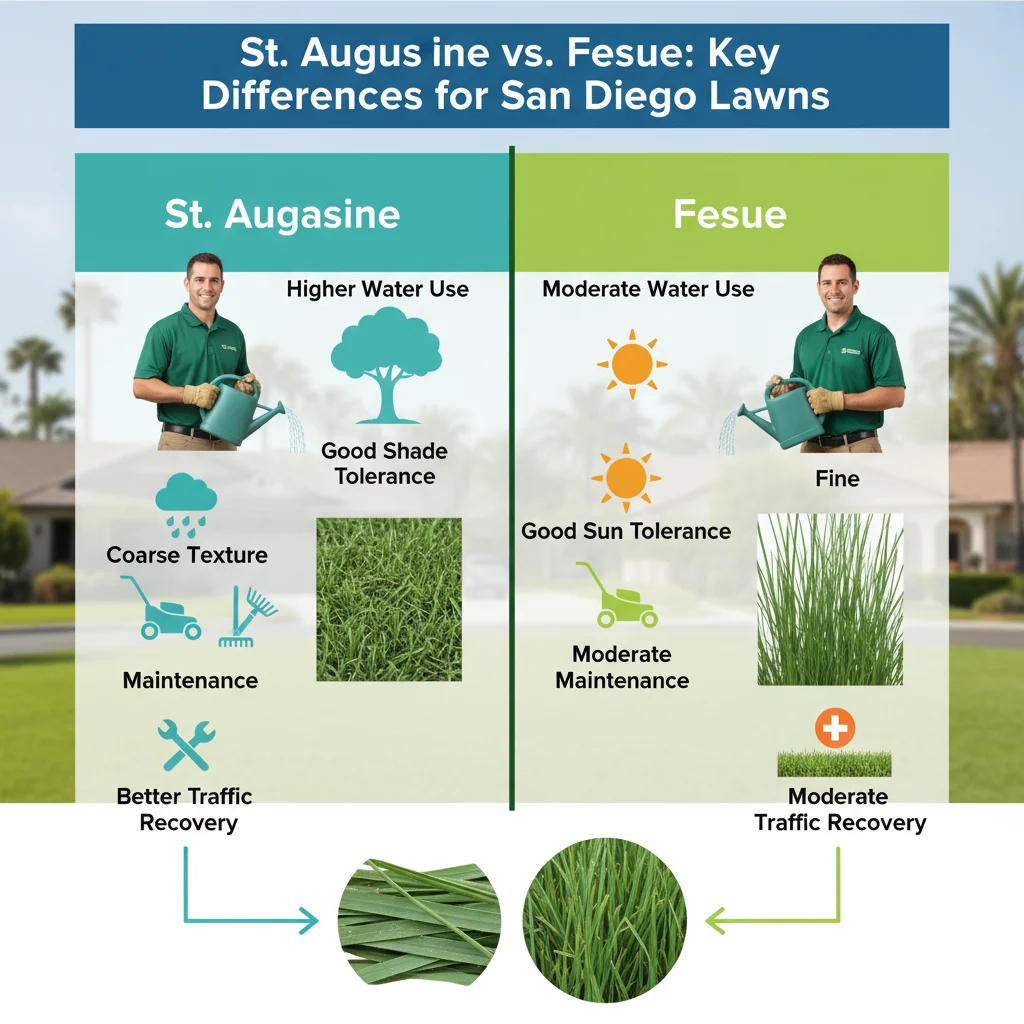
| Feature | St. Augustine Grass | Fescue Grass |
|---|---|---|
| Appearance | Wide, coarse blades; dense, carpet-like; dark green | Fine, thin blades; softer texture; medium to dark green |
| Growth Habit | Spreading (stolons); forms dense mat | Bunching (some rhizomes); fills in slower |
| Sun Preference | Moderate to full sun, tolerates significant shade | Full sun to partial shade, struggles in deep shade |
| Water Needs | Moderate to high; less drought-tolerant | Moderate; better drought tolerance |
| Traffic Tolerance | Good; recovers well from damage | Moderate; can show wear, slower to recover |
| Mowing Height | Higher (2-4 inches) | Lower to moderate (2-3 inches) |
| Fertilizer Needs | Moderate to high | Moderate |
| Pest Resistance | Good, but susceptible to chinch bugs | Good, but susceptible to some fungal diseases |
| Best For SD | Lush, shade-tolerant areas; coastal regions | Sunnier, lower-water areas; inland regions |
Appearance and feel: shade vs. sun preferences
St. Augustine grass, a warm-season variety, has distinctive broad, flat blades that form a dense, carpet-like lawn with a rich, dark green color. It feels coarse and substantial underfoot. Its vigorous, sprawling growth, spreading by stolons (above-ground runners), creates a very thick turf. This density is excellent for suppressing weeds but requires consistent edging around flower beds or pathways. St. Augustine excels in moderate to full sun but notably tolerates partial shade, making it suitable for San Diego yards with mixed light conditions, like those with mature trees or north-facing areas receiving some daily sun.
Fescue, a cool-season grass (typically Tall Fescue for San Diego), features much finer, thinner blades, giving a softer feel and appearance. Its color is medium to dark green. Fescue grows in a bunching habit, meaning it doesn’t spread aggressively via runners and often requires overseeding to maintain density over time. It prefers full sun but can tolerate partial shade, though it struggles in deep, dense shade. Fescue is also more prone to stress in extreme San Diego heat without proper watering, making sun exposure a critical factor in its performance here.
Water needs: which is more drought-tolerant
Water conservation is a critical consideration for any San Diego homeowner, and your grass choice plays a significant role in your overall water footprint. Fescue grass generally offers better drought tolerance than St. Augustine. Tall Fescue develops a deeper root system, allowing it to access moisture deeper in the soil. This makes it more efficient at extracting water and tolerating periods of drier conditions once established. It still needs consistent watering, especially in San Diego’s hot summers, but it can endure slightly longer between irrigations. Smart irrigation practices significantly help Fescue thrive while conserving water.
St. Augustine grass has higher water requirements due to its broad blades and dense growth, leading to more water loss through evapotranspiration. It needs consistent moisture to maintain its lush, dark green appearance, particularly in dry San Diego heat. If under-watered, it quickly shows stress by turning blue-grey before browning. St. Augustine is less forgiving of neglect than Fescue when it comes to irrigation. For a St. Augustine lawn, an efficient irrigation system and tailored watering are essential. Resources from the San Diego County Water Authority can guide water-efficient landscaping.
Durability and traffic tolerance for families and pets
If your San Diego lawn sees a lot of action from kids, pets, or frequent outdoor gatherings, its ability to withstand and recover from foot traffic is a major factor. In terms of durability and traffic tolerance, St. Augustine grass typically outperforms Fescue. Its stoloniferous growth allows it to spread vigorously, quickly repairing worn or damaged areas. Runners extend into bare spots, re-establishing turf relatively fast. This makes St. Augustine excellent for active families with children or households with pets, as its dense growth provides a resilient cushion against impact and helps it bounce back from compaction and scuff marks.
Fescue grass, especially Tall Fescue, offers moderate traffic tolerance. As a bunching grass, it lacks St. Augustine’s aggressive self-repair capabilities. Heavy, consistent foot traffic can lead to bare spots or thinning that takes longer to fill naturally, often requiring overseeding or patching to restore uniformity. If pets or children frequently use the same areas, you might see more noticeable wear and tear with Fescue. However, for lawns with moderate activity or those where traffic is more evenly distributed, Fescue can still be suitable. Strategies like varying play areas or using stepping stones in high-traffic zones help preserve a Fescue lawn’s beauty.
Maintenance requirements: mowing, fertilizing, and pest resistance
Maintaining a healthy lawn in San Diego involves consistent care, but the specific tasks vary between St. Augustine and Fescue. St. Augustine grass generally requires a higher mowing height, usually between 2 to 4 inches, to maintain its health and density. Mowing too short can stress the grass, especially in summer. Its aggressive growth means more frequent mowing during its active growing season, which can be extended in San Diego’s mild climate. Fertilization needs for St. Augustine are moderate to high. While generally robust, St. Augustine can attract chinch bugs, causing irregular brown patches, and is susceptible to fungal diseases if overwatered. Regular inspection and timely treatment are important.
Fescue grass can be mowed a bit shorter, typically between 2 and 3 inches. It doesn’t spread as aggressively, but regular mowing is still necessary to maintain a tidy appearance. Fescue typically has moderate fertilization requirements, often needing fewer applications than St. Augustine, benefiting from a slow-release fertilizer in fall and spring. It’s generally resilient to pests and diseases but can face fungal issues like brown patch or dollar spot if conditions are too humid or wet, especially in shady, poorly circulated areas. Proper irrigation, air circulation, and good drainage help prevent these. For both types, integrating weed control and prevention into your maintenance schedule will help keep your lawn pristine.
Sun vs. shade: which parts of your yard suit each grass type
Your yard’s sun exposure is perhaps the most critical factor when choosing between St. Augustine and Fescue for your San Diego property. St. Augustine grass is renowned for its superior shade tolerance among warm-season grasses. It thrives in areas that receive moderate to full sun but can maintain a healthy, green appearance with as little as 4-6 hours of direct sunlight per day, or even filtered light throughout the day. This makes it an ideal choice for yards with mature trees, houses that cast long shadows, or north-facing sections where other grasses might struggle. For a shaded backyard oasis with pergolas, trellises, or substantial landscaping elements, St. Augustine is likely your best option for a lush lawn.
Fescue grass, particularly Tall Fescue, is quite adaptable to San Diego’s sunny conditions. It prefers full sun, ideally receiving 6-8 hours or more of direct sunlight daily to perform its best. It can also tolerate partial shade, such as areas getting morning sun and afternoon shade, which helps protect it from the most intense heat. However, Fescue will thin out and struggle in dense, heavy shade, where it won’t receive enough light to photosynthesize effectively. For large, open front yards with uninterrupted sun exposure, or south-facing areas that bake in the afternoon sun, Fescue is an excellent choice, assuming adequate water. Its sun tolerance makes it suitable for many hotter, drier inland San Diego properties.
Our recommendation for most San Diego yards
After weighing all these factors, making a definitive choice between St. Augustine and Fescue for your San Diego lawn comes down to your specific yard conditions, lifestyle, and priorities. For most San Diego yards, particularly those in diverse microclimates across the county, we often lean towards Tall Fescue grass. Its superior drought tolerance makes it a more sustainable and water-wise choice, aligning with San Diego’s long-term water conservation goals and helping you manage your utility bills. Fescue’s moderate traffic tolerance and adaptable nature also make it a versatile option for many families. While St. Augustine excels in dense shade, many San Diego yards feature mixed sun exposure or predominantly sunny areas where Fescue truly shines. It’s also often easier to maintain with less aggressive spreading, which means less edging work around flower beds.
However, St. Augustine is the clear winner if your yard has significant, consistent shade where Fescue simply won’t thrive. It’s also an excellent choice for coastal areas that benefit from slightly more humidity and milder temperatures, allowing its higher water needs to be met more easily.
Ultimately, the best grass type for you depends on a careful assessment of your property. If you’re ready to transform your lawn, our expert team provides comprehensive sod installation services, helping you select and lay the perfect turf for your home. We can also consult on the best grass types more broadly for your unique property, building on topics like those covered in our guide to the best grass types for San Diego lawns.
When to call us
Choosing the right grass and ensuring its proper installation is a critical step towards a beautiful and sustainable San Diego lawn. If you’re unsure which grass is best for your unique yard, or if you need professional installation to guarantee a healthy start, our experienced team is here to help. We handle everything from site preparation to laying the sod, ensuring your new lawn thrives. Call us at (858) 925-5546 for a same-day estimate.