Thinking about adding a beautiful and durable paver patio to your San Diego backyard? Knowing the potential costs upfront helps you plan your budget effectively. This guide breaks down 2026 pricing for paver patio installations, considering different materials, patio sizes, and the hidden factors that influence your final bill.
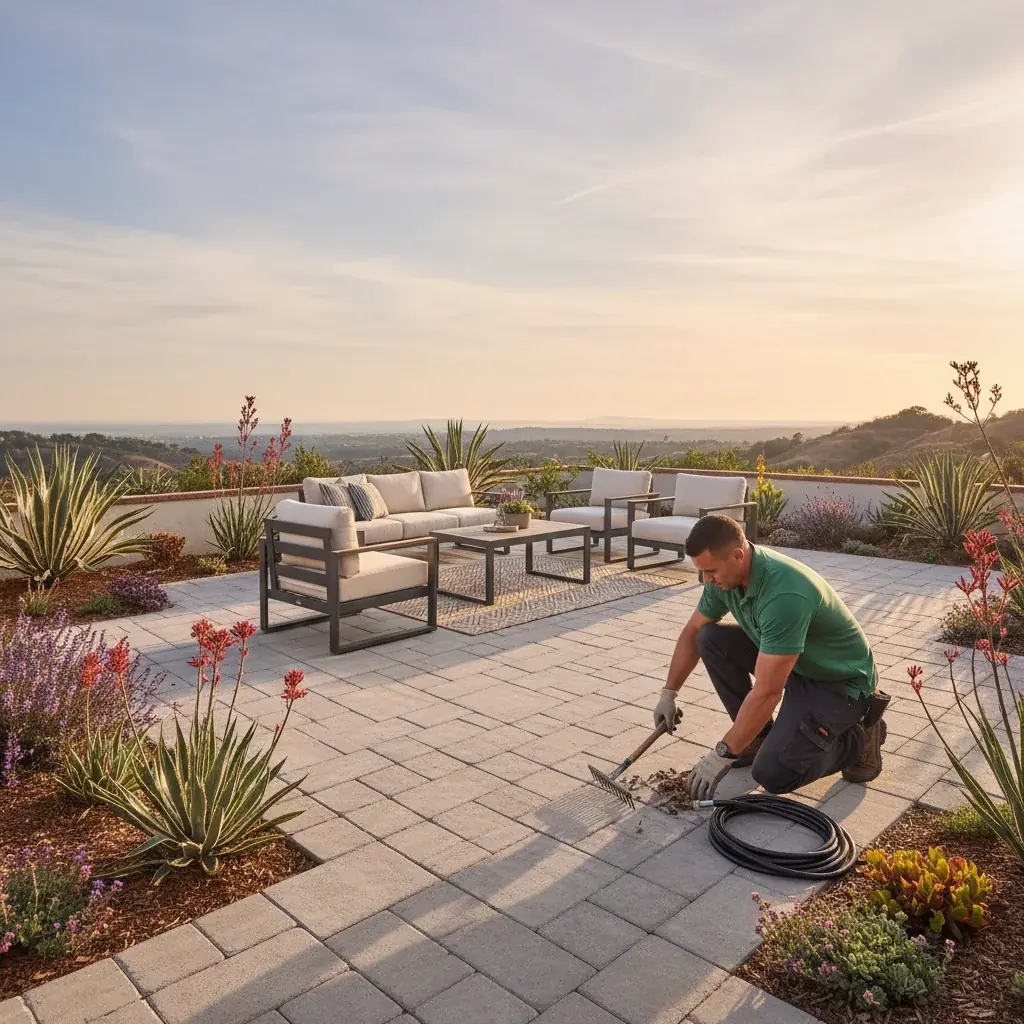
Per-square-foot ranges: concrete pavers, natural stone, travertine
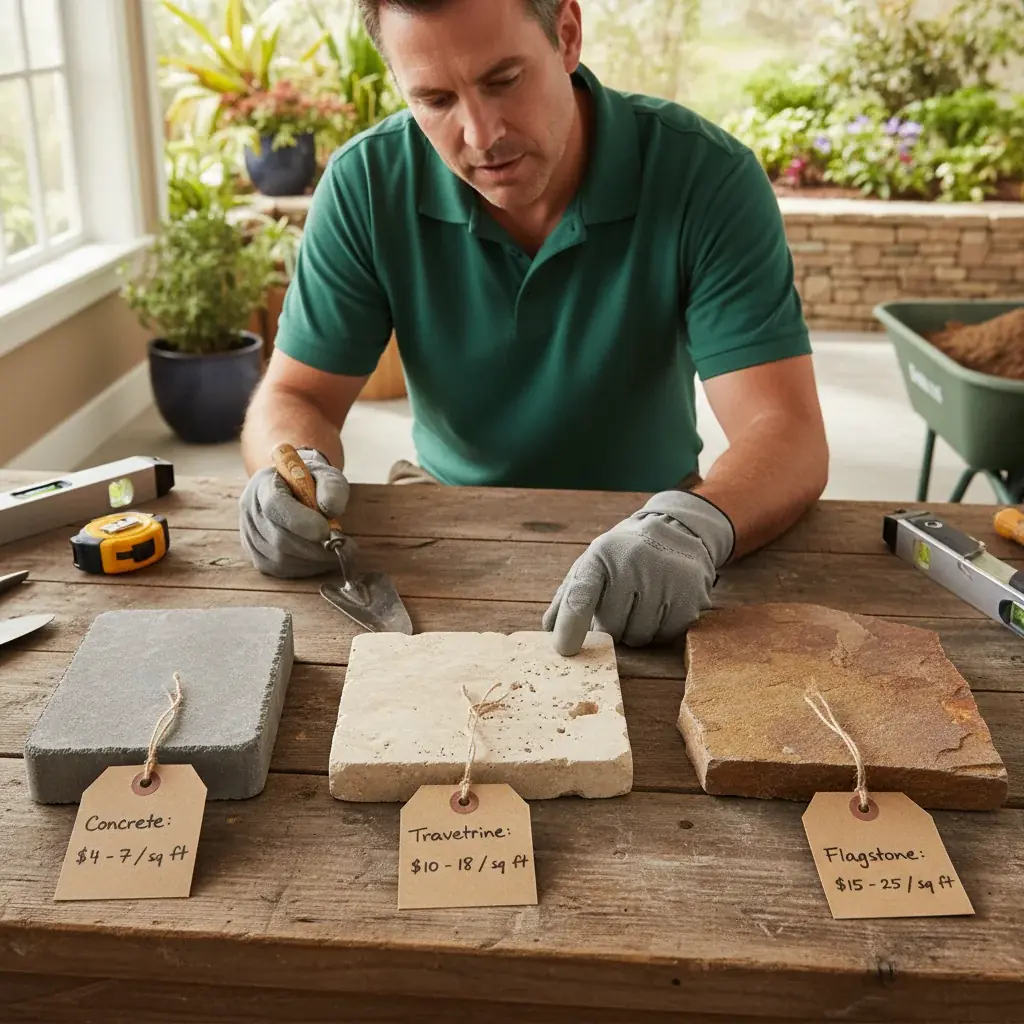
The material you choose is often the biggest driver of your paver patio’s per-square-foot cost. Each option offers unique aesthetics, durability, and price points. It’s smart to weigh these factors against your budget and desired look.
Concrete Pavers: These are typically the most budget-friendly option and a very popular choice in San Diego. They come in a vast array of shapes, sizes, colors, and textures, mimicking everything from brick to natural stone. You’re usually looking at a range of $3 to $10 per square foot for the material itself. The installation cost, which includes labor and other necessary components like base material, often brings the total installed cost to $15 to $30 per square foot. Concrete pavers are known for their strength and easy maintenance, making them a practical choice for many homeowners. Their versatility also allows for creative designs, from simple walkways to intricate patterns.
Natural Stone: Materials like flagstone, slate, or granite offer a high-end, organic look that blends beautifully with San Diego’s natural landscape. Each type of stone has its own unique characteristics. Flagstone, for instance, provides an irregular, rustic appeal, while cut granite delivers a more formal, refined aesthetic. The material cost for natural stone can vary widely, from $8 to $25 per square foot, depending on the stone type, origin, and rarity. Due to the need for precise cutting and often heavier handling, installation can be more labor-intensive. Expect installed costs for natural stone patios to typically fall between $25 to $50 per square foot.
Travertine Pavers: Travertine is a form of limestone known for its elegant, porous surface and cool-to-the-touch properties, making it a fantastic choice for sunny San Diego. It’s especially popular around pools. Travertine offers a luxurious feel and comes in warm, earthy tones like beige, tan, and cream. The material cost usually runs from $6 to $15 per square foot. While it’s relatively durable, travertine requires proper sealing to protect its porous surface. The installed cost for a travertine paver patio generally ranges from $20 to $40 per square foot. When considering these prices, remember they cover the pavers themselves and the skilled labor for installation. Bloom Pro SD helps clients choose the right material for their vision and budget.
Site prep that hides in the quote: excavation, base, drainage
You might only see the beautiful pavers, but significant work happens below the surface to ensure your patio lasts. Site preparation is a crucial part of any paver installation and accounts for a substantial portion of the overall cost. These steps are essential for a stable, long-lasting, and properly draining patio.
First, there’s excavation. We need to remove existing turf, soil, or old patio materials to create a stable foundation. The depth of excavation depends on the paver thickness and the required base material. If the area has dense clay soil, large rocks, or existing concrete, excavation can become more complex and increase labor hours. Hauling away excavated material also adds to the cost, usually factored into the overall project.
Next, we build the base. This involves laying down and compacting layers of crushed gravel or aggregate. A solid, well-compacted base is paramount for preventing settling, shifting, and cracking over time. In San Diego, especially in areas with expansive soils, a thicker or more specialized base might be necessary. The amount of base material and the labor required for its proper compaction will impact the price. It’s not just about dumping gravel; it’s about creating a level, stable platform that can support the weight of the pavers and withstand foot traffic and furniture.
Finally, drainage is a critical consideration. Proper drainage prevents water from pooling on your patio or flowing towards your home’s foundation. This might involve grading the area to create a slight slope away from structures, or installing trench drains and French drains. Poor drainage can lead to structural issues for the patio and your home, as well as aesthetic problems like efflorescence or moss growth. Incorporating effective drainage solutions from the start is an investment that protects your property and the longevity of your patio. These preparatory steps, while not glamorous, are non-negotiable for a high-quality paver patio.
Patterns and edging that change the bill
The basic grid pattern for pavers is straightforward, but creative designs can significantly elevate your patio’s look. However, these custom touches often add to the labor cost due to the increased complexity and time involved.
Paver Patterns: Simple patterns like running bond or stack bond use rectangular pavers laid in straight lines, requiring less cutting and planning. These are the most cost-effective. As you move to more intricate designs, such as herringbone, basketweave, or circular patterns, the labor costs typically rise. Herringbone, for example, requires pavers to be laid at 45-degree angles, demanding precise cuts and careful alignment. Intricate patterns also generate more waste from cut pavers, which contributes to the overall material cost. A skilled installer can execute these designs flawlessly, creating a stunning visual impact, but that expertise comes at a price.
Edging: Edging is crucial for keeping your pavers in place and preventing them from shifting or spreading over time. The simplest edging uses a sturdy plastic or metal restraint installed along the perimeter, often hidden beneath the border pavers or mulch. This is typically included in most standard installations. If you opt for decorative edging, such as a contrasting paver color, a soldier course (pavers laid perpendicular to the main pattern), or even a small retaining wall built into the patio’s edge, costs will increase. These decorative elements require more material, more cuts, and more specialized installation techniques. They do, however, add a finished, high-end look to your patio, defining its boundaries and enhancing its visual appeal. It’s part of a comprehensive landscape design that considers every detail.
When you’re comparing quotes, ask for a detailed breakdown that shows how much of the cost is for the pavers themselves, how much for site preparation, and how much for the labor involved in specific patterns or edging choices. These details help ensure your new hardscaping project aligns with your expectations and budget.
Permit thresholds and when you need one in San Diego County
Navigating permits can sometimes feel complicated, but it’s a necessary step for certain home improvements in San Diego County. For paver patios, the need for a permit usually depends on the size of the impervious surface you’re creating and how it impacts stormwater runoff.
In San Diego County, local regulations focus on managing stormwater runoff to protect water quality. An “impervious surface” is any surface that doesn’t allow water to seep into the ground, like a paver patio (even though pavers have joints, for permit purposes they are often considered largely impervious). Generally, if your new paver patio project significantly increases the amount of impervious surface on your property, or if it involves substantial grading or structural work, you will likely need a permit from your local jurisdiction (City of San Diego, Chula Vista, Oceanside, etc.).
Specific thresholds vary by municipality within San Diego County, but a common trigger is often adding more than 200 to 500 square feet of impervious surface. For example, if you’re building a large patio that covers a substantial portion of your backyard, it’s very probable you’ll need a permit. Projects that involve altering natural drainage patterns or requiring significant excavation might also trigger permit requirements, regardless of size.
It’s always best practice to consult with the specific planning or building department of your city or the County of San Diego if you’re in an unincorporated area. They can provide the most accurate and up-to-date information on permit requirements for your specific project. A reputable landscaping contractor will be familiar with these local codes and can help guide you through the permitting process, or even handle it for you. Ignoring permit requirements can lead to fines, project delays, or even the need to tear out and rebuild your patio if it’s not compliant. It’s a small upfront effort that saves a lot of headaches later on.
Sealing, joint sand, and long-term maintenance cost
Once your paver patio is installed, a few finishing touches and ongoing maintenance steps help protect your investment and keep it looking its best. These aren’t just cosmetic; they significantly impact the patio’s longevity and performance.
Joint Sand: After pavers are laid, polymeric sand is swept into the joints between them. This special sand contains polymers that activate when wet, hardening to create a durable, flexible bond that locks the pavers in place. It also helps prevent weed growth and insect infestations. The cost of polymeric sand is generally included in the initial installation quote, but if you need to reapply it years down the line, it’s an expense to consider. This process helps your patio withstand San Diego’s weather shifts and foot traffic.
Sealing: Applying a high-quality sealer to your pavers is a proactive step that protects them from stains, fading, and erosion. Sealers can enhance the color of your pavers, provide a wet look, or simply offer a clear, protective layer. While not strictly mandatory, sealing is highly recommended, especially for natural stone and travertine, which are more porous. In sunny San Diego, UV exposure can fade colors over time, and a good sealer offers protection. The cost for sealing is typically an add-on service, ranging from $1 to $3 per square foot, and should be reapplied every 2-5 years depending on the product and exposure. This helps extend the life and beauty of your patio, reducing the need for more intensive cleaning or repairs down the road.
Long-Term Maintenance: Compared to other patio materials like poured concrete, paver patios are known for their ease of maintenance and repair. If a paver gets cracked or stained, you can usually lift and replace individual pavers without disturbing the entire patio. This is a significant advantage in terms of long-term cost savings. Regular maintenance includes sweeping or blowing debris, occasional washing with a hose or power washer (on a low setting), and reapplying joint sand and sealer as needed. We also recommend considering how your paver patio integrates with other hardscaping elements, like a retaining wall, for a cohesive and durable outdoor space.
Real project ranges by patio size
Understanding the per-square-foot cost is useful, but seeing how these numbers translate to actual project sizes gives you a clearer picture for your San Diego home. Keep in mind these are broad ranges, and your specific project cost will depend on material choice, site conditions, patterns, and accessibility.
Small Patio (100-200 sq ft): This size is perfect for a cozy bistro dining area, a small reading nook, or an entry patio. Using mid-range concrete pavers, a 150 square foot patio could cost roughly $2,250 to $4,500. If you opt for natural stone, that same 150 square feet might range from $3,750 to $7,500. Smaller projects can sometimes have a slightly higher per-square-foot cost due to fixed costs like site setup and equipment transport being spread over fewer square feet.
Medium Patio (200-400 sq ft): A medium-sized patio provides ample space for an outdoor dining set and perhaps a small lounge area. For a 300 square foot patio with concrete pavers, you’re likely looking at $4,500 to $9,000. Upgrading to travertine could put you in the $6,000 to $12,000 range for the same size. This size offers good versatility without overwhelming a typical San Diego backyard.
Large Patio (400-800+ sq ft): These expansive patios can accommodate multiple zones – dining, lounging, and perhaps an outdoor kitchen or fire pit. A 600 square foot patio with concrete pavers could range from $9,000 to $18,000. For a more luxurious natural stone option, a 600 square foot patio might run $15,000 to $30,000. Larger projects often benefit from economies of scale, potentially bringing the per-square-foot cost down slightly compared to very small jobs, especially with simpler paver patterns. The overall backyard patio cost can vary widely based on these factors.
It’s important to get a detailed, written estimate from a reputable contractor. This estimate should break down costs for materials, labor, site preparation, and any special features or patterns. At Bloom Pro SD, we provide transparent quotes so you know exactly what you’re paying for.
When to call us
When you’re ready to transform your outdoor living space with a durable and beautiful paver patio, it’s time to connect with a licensed landscaping professional. We handle everything from initial design and material selection to expert installation and proper drainage, ensuring a patio that enhances your home’s value and enjoyment for years to come. Call us at (858) 925-5546 for a same-day estimate.